How to Bargain in Moroccan Souks: Respectful Haggling Tips
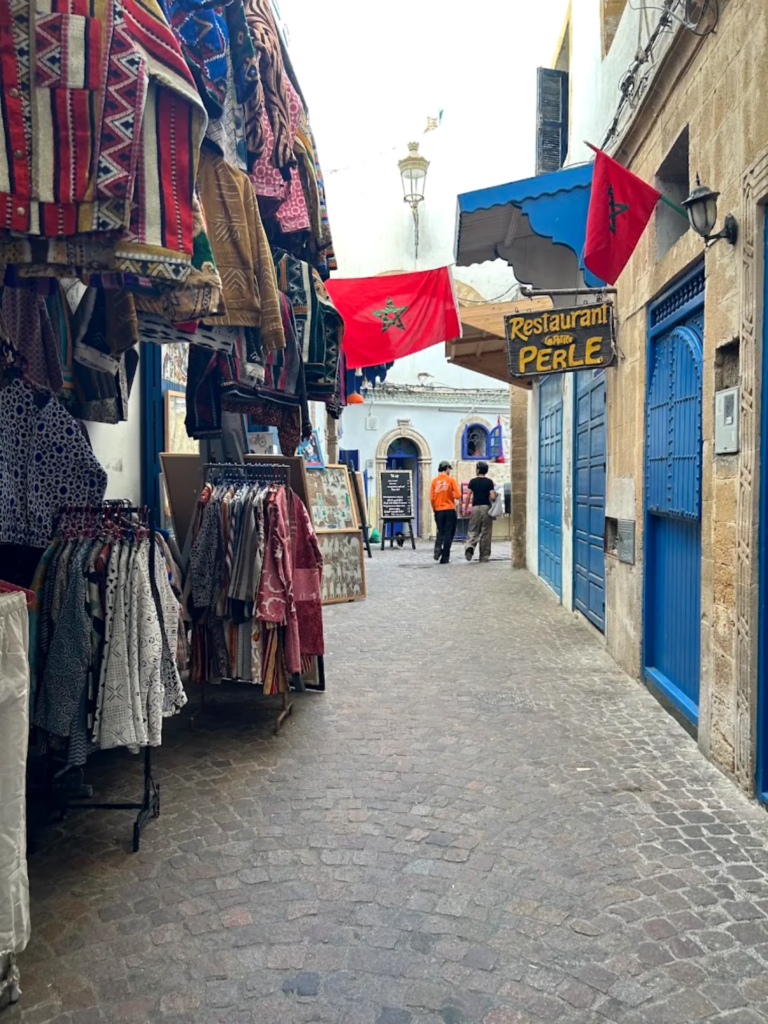
The first time most travellers step into the souks north of Jemaa el-Fna, the price of a pair of slippers feels like a riddle. The seller says 400 dirhams, smiles, offers mint tea, and somehow you leave with two pairs and no idea whether you did well. Learning how to bargain in Moroccan souks is less about winning and more about understanding a social ritual that has run the same way for centuries. Done right, it is good fun for both sides. Done badly, it leaves a sour taste for everyone.
We are a Marrakech-based team, and we shop in these lanes ourselves for gifts, for our homes, for friends visiting from abroad. What follows is the advice we give our own travellers before they set foot in the medina.
In short: decide what an item is worth to you before you ask, let the seller name the first price, counter at roughly 30–50% of it, and meet somewhere in the middle with good humour. If the numbers don’t work, thank the shopkeeper and walk away politely. Prices are rarely fixed in the souk, but they are fixed at the Ensemble Artisanal, supermarkets and most cooperatives.
Why bargaining exists in the first place
In the medinas of Marrakech and Fes, both listed by UNESCO (Medina of Marrakesh and Medina of Fez), most small shops have never used price tags. The price depends on the day, the buyer, how many items you take, whether it is the first sale of the morning (considered lucky, so often cheaper), and frankly how much the seller thinks you can pay.
Moroccans bargain too, just with better information. Your goal is to close that information gap, not to squeeze the last dirham out of a craftsman who may have spent two days hand-stitching the bag you are holding.
The golden rules of haggling
1. Only ask the price if you are genuinely interested
Asking “how much?” is an opening move, not idle curiosity. Once a price is spoken, the shopkeeper reasonably expects a conversation. If you are only browsing, say so: a smile and “just looking, shukran” is perfectly acceptable.
Equally, never name a counter-offer for something you have no intention of buying. If the seller accepts your number, you are expected to pay it. Backing out at that point is the one thing that genuinely offends.
2. Know your number before you start
Before you ask a single price, decide what the item is worth to you. Window-shop for the first day or two. Ask prices in three or four shops without committing. The range will soon become obvious.
We usually tell our travellers to visit the Ensemble Artisanal first (more on it below). Its fixed prices give you a reliable ceiling for the medina.
3. Let the seller go first, then counter with the 30–50% rule
Always let the shopkeeper name the opening price. When they ask “what’s your best price?” before saying anything, turn it back gently: “You are the seller, you tell me.”
Once you have a figure, a fair opening counter is usually around 30–50% of the asking price. Closer to 30% in the most tourist-heavy lanes around Jemaa el-Fna and Souk Semmarine, where first prices can be three or four times the going rate. Closer to 50% in quieter corners of the medina, in Fes, or in smaller towns where first prices are more honest. Most deals land somewhere between 50% and 70% of the opening figure.
4. Move slowly and keep it light
Raise your offer in small steps, and expect the seller to come down in slightly larger ones. Compliment the work. Accept the tea if it is offered; it is hospitality, not a trap, and drinking it does not oblige you to buy.
A few words of Darija help enormously. Bshhal? (how much?), ghali bezzaf (very expensive), shukran (thank you) and la, shukran (no, thank you) will earn you warmer prices than any tactic.
5. Bundle to save
Buying several items from one shop is the single most effective way to bring the price down. Three pairs of babouches will cost noticeably less per pair than one. Negotiate the total, not each piece.
6. Walk away politely
If you cannot agree, say thank you, smile and leave. Walking away is not rude; it is part of the process. Often you will be called back with “OK, OK, last price” before you reach the next shop. If not, your number was too low, and you have learned something useful.
What you should not do is storm off, argue, or accuse the seller of cheating. Keep it friendly, and you can come back tomorrow.
7. Pay in cash, in dirhams
Few small shops in the souk take cards, and those that do may add a surcharge. Carry small notes; producing a 200-dirham note to pay for a 60-dirham purchase weakens your position and sometimes causes a long wait for change. ATMs are easy to find just outside the medina gates and along Avenue Mohammed V in Marrakech.
Souk Shopping Dos and Don’ts
- Do window-shop and compare prices in three or four stalls before buying.
- Do learn a few Darija phrases and greet shopkeepers with salam alaikum.
- Do carry small notes and coins in dirhams.
- Do check stitching, glue and finishes carefully before agreeing a price.
- Don’t ask the price, or make an offer, on something you would not buy.
- Don’t follow unofficial “guides” who offer to show you a tannery or a “Berber market that’s only open today”. Commission ends up in your price.
- Don’t photograph stalls or shopkeepers without asking first.
- Don’t haggle over food staples, bread or a 5-dirham orange juice; it reads as mean-spirited.
Souvenir pricing benchmarks
These are approximate ranges we see in Marrakech and Fes in 2026 for decent mid-range quality, after reasonable bargaining. At about 10–11 MAD to the euro, 100 MAD is roughly €9–10 or US$10–11. Expect opening prices well above these ranges near the main squares, and treat the figures as a guide rather than a guarantee.
| Item | Typical first asking price (MAD) | Fair price after bargaining (MAD, approx.) | What to check |
|---|---|---|---|
| Leather babouches (slippers) | 250–500 | 100–250 | Real leather sole, stitching rather than glue, comfortable heel |
| Argan oil, 100 ml (cosmetic, cooperative) | Often fixed: 120–250 | 100–200 | Sealed glass bottle, light nutty smell, cooperative label |
| Argan oil, 250 ml (culinary, toasted) | Often fixed: 200–350 | 150–300 | Deep golden colour, toasted aroma, batch label |
| Small brass or copper lantern | 300–700 | 150–400 | Weight, solid joints, clean pierced patterns |
| Large brass lantern (60 cm+) | 1,500–4,000 | 800–2,500 | Wiring if electrified, glass panels intact |
| Small Berber rug (approx. 1 x 1.5 m) | 3,000–8,000 | 1,200–4,000 | Hand-knotted back, natural wool, even edges |
| Medium/large Berber rug (2 x 3 m) | 15,000–40,000 | 6,000–20,000 | Knot density, dyes, age claims, shipping cost |
Leather babouches
The pointed slippers piled in every colour around Souk Smata (the babouche souk) in Marrakech are the classic first purchase. Cheaper pairs use thin leather glued onto a synthetic sole and fall apart within months. A better pair has a stitched leather sole and soft goatskin uppers. Prices in Fes tend to be a little lower than in Marrakech.
Argan oil and cooperatives
This is where we change the advice. The best argan oil is bought from women’s cooperatives, mostly found on the road between Marrakech and Essaouira or around Agadir and Taroudant. Prices there are usually fixed and clearly displayed, and part of the money goes back to the women who crack the nuts by hand. Bargaining at a cooperative is unusual and generally not appreciated.
Be cautious in the medina. Argan sold cheaply in unlabelled plastic bottles is often diluted with other oils. If 100 ml costs 40 dirhams, it is not pure argan.
Brass lanterns
The lantern stalls of Souk Haddadine, the metalworkers’ quarter in Marrakech, are a sight even if you buy nothing. Heavier brass is a good sign; light, tinny lanterns are often plated steel that will rust. If you are flying home, ask the seller to wrap it in cardboard, and keep larger pieces in hand luggage where possible. Fragile glass panels rarely survive the hold.
Berber rugs
Rug buying is the big league of Moroccan bargaining, and the one where travellers most often overpay. You will be seated, served tea and shown dozens of rugs unrolled with a flourish. Take your time, and never buy on the first visit.
Be sceptical about claims that a rug is “100 years old” or “made by my grandmother”. Many good rugs are new, and that is fine. Pay for the rug in front of you, not the story. If you want it shipped, get the dimensions, description and shipping cost in writing and keep the receipt; most travellers who have had problems with shipping paid without documentation. Honestly, if you love it and it fits in a suitcase, carry it home yourself.
One more downside worth knowing: shops your driver or guide brings you to may pay them commission, which ends up in your price. When our guides take travellers on Marrakech tours or guided Fes tours, shopping stops are always optional and you can simply say no.
Fixed-price places: the Ensemble Artisanal and beyond
If haggling sounds exhausting, or you just want a reference point, Morocco has plenty of fixed-price options.
- Ensemble Artisanal, Marrakech. A government-backed crafts complex on Avenue Mohammed V, a ten-minute walk from the Koutoubia Mosque. Artisans work on site, prices are marked, and there is no pressure. Prices are usually a little higher than a well-negotiated souk price, but lower than most opening prices in the medina. Fes and other major cities have their own Ensemble Artisanal complexes too.
- Women’s cooperatives. For argan oil, amlou (almond-argan spread), cosmetics and some textiles. Fixed prices, clear labels, money that reaches the producers.
- Concept stores in Gueliz. Design-led pieces at fixed, often European-level prices.
- Supermarkets. Carrefour and Marjane sell spices, tea, olive oil and even argan oil at fixed prices, which are useful benchmarks for edible souvenirs.
We usually suggest a mix: browse the Ensemble Artisanal on day one to learn prices, then enjoy the souks once you know what things are worth.
A story from the souk
One of our guests, a retired teacher from Leeds, spent forty minutes negotiating over a leather pouffe in Fes, drank three glasses of tea and finally paid 350 dirhams for something first offered at 900. The next day she walked past the same shop and the owner waved her in for more tea, no sale expected. That is how it should feel.
Practical tips for the medina
- Go early. Mornings (9–11am) are calmer, and the first sale of the day sometimes comes cheaper. Friday lunchtime is quiet as many shops close for prayers.
- Dress comfortably and modestly. You will feel more at ease and attract less attention. Our guide to what to wear in Morocco covers the details.
- Expect the hard sell to be friendly. Persistence is normal, aggression is not. A firm, smiling “la, shukran” is enough. Women travelling alone can find our tips on whether Morocco is safe for solo female travellers useful.
- Budget for shopping. It is easy to spend more on souvenirs than on meals. See our breakdown of how expensive Morocco is to plan your spending.
If you would rather have someone local beside you for your first visit, a private Morocco tour with a licensed guide makes the souks far less intimidating. Official guides carry a badge, know fair prices and can translate when the negotiating gets serious. The official Moroccan tourism portal also has background on regional crafts.
Frequently asked questions
Is it rude not to bargain in Morocco?
No. If you are happy with the asking price, you can pay it, and nobody will be offended. You will simply pay more than necessary. What is rude is bargaining hard and then refusing to buy once your price is accepted.
How much should I offer when bargaining in Marrakech?
A good starting counter-offer is around 30–50% of the first price, depending on how touristy the area is. Most deals end at roughly 50–70% of the opening figure. Near Jemaa el-Fna, start lower; in quieter lanes and in Fes, start a little higher.
Can I bargain in shops with price tags?
Usually not. The Ensemble Artisanal, cooperatives, supermarkets and boutiques have fixed prices. In the souk, a handwritten tag is sometimes just a starting point, so it does no harm to ask politely if there is a discount for several items.
Is Fes cheaper than Marrakech for shopping?
Often slightly, especially for leather, ceramics and brass, since many workshops are in the Fes medina itself. Marrakech has a wider choice and more competition, but its opening prices are generally higher. Our guide to the imperial cities of Morocco covers what each city is known for.
Do souk shops accept credit cards?
Most small stalls are cash only. Larger rug and furniture shops often take cards, sometimes with a surcharge of a few percent. Bring dirhams in small notes for everyday purchases.
Should I tip a guide who takes me shopping?
Tip your guide for the guiding, not the shopping. If a guide pushes you into shop after shop, it is fine to say you would prefer to explore the monuments instead.
The souks are one of the great pleasures of a trip to Morocco, and a little preparation turns them from stressful into memorable. If you would like a local guide for your first medina visit, or a trip that weaves Marrakech, Fes and the Sahara together at your own pace, get in touch with our Marrakech team and we will help you plan it.