
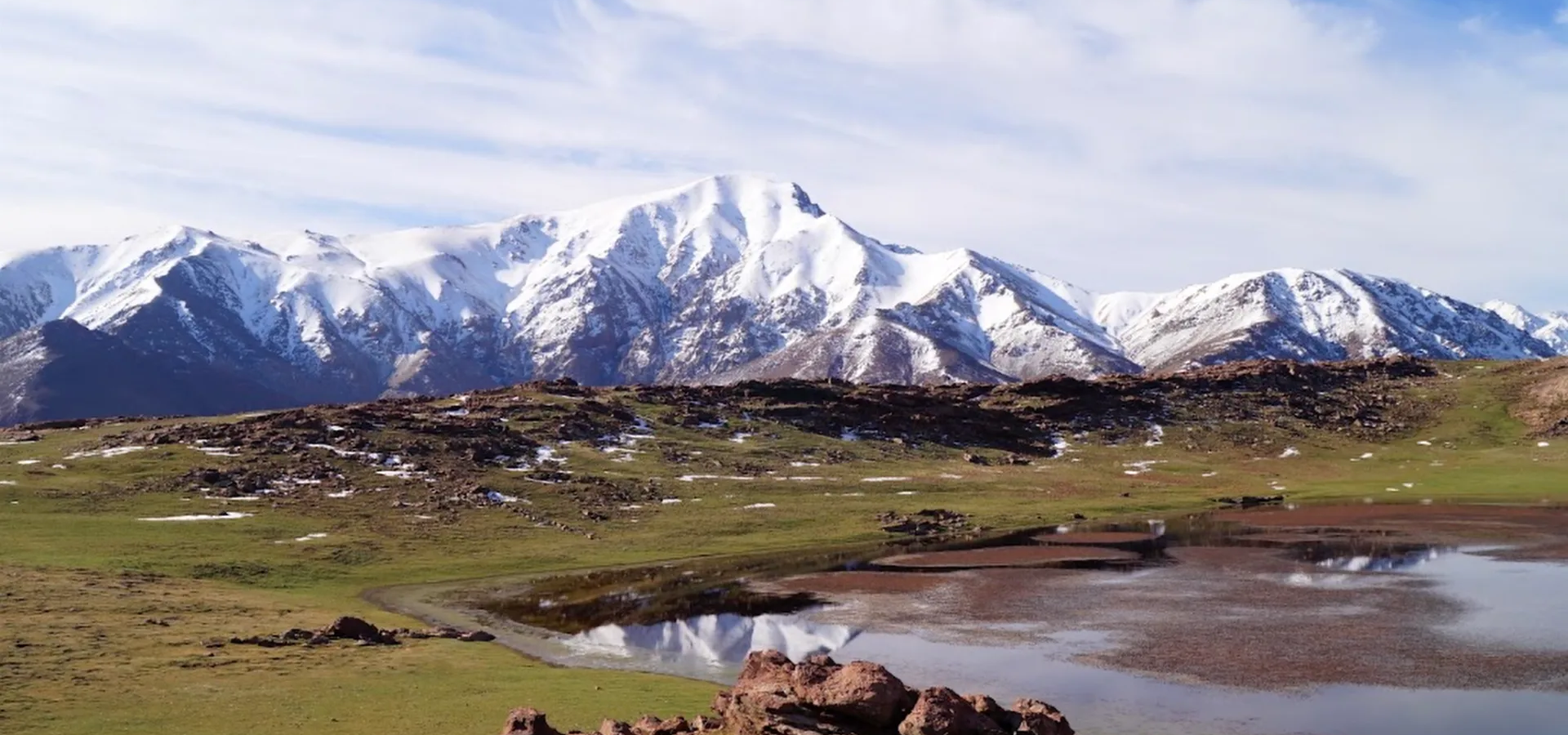
Morocco hiking tours cover more ground than most visitors expect: mule paths between Amazigh villages in the High Atlas, the summit of North Africa’s highest mountain, forest trails in the Rif above Chefchaouen and quiet walks across the Sahara dunes. A day can be as gentle as a stroll through walnut groves or as demanding as a pre-dawn push to 4,167 m.
We are a local team based in Marrakech with more than ten years of experience on these paths. Our fixed walking trips run in the Sahara around Merzouga, and you can book them online below. Treks in the Atlas and the Rif are arranged as tailor-made trips on request, with licensed local guides, mules for the luggage and village homes or mountain refuges for the nights.
Hiking in the High Atlas
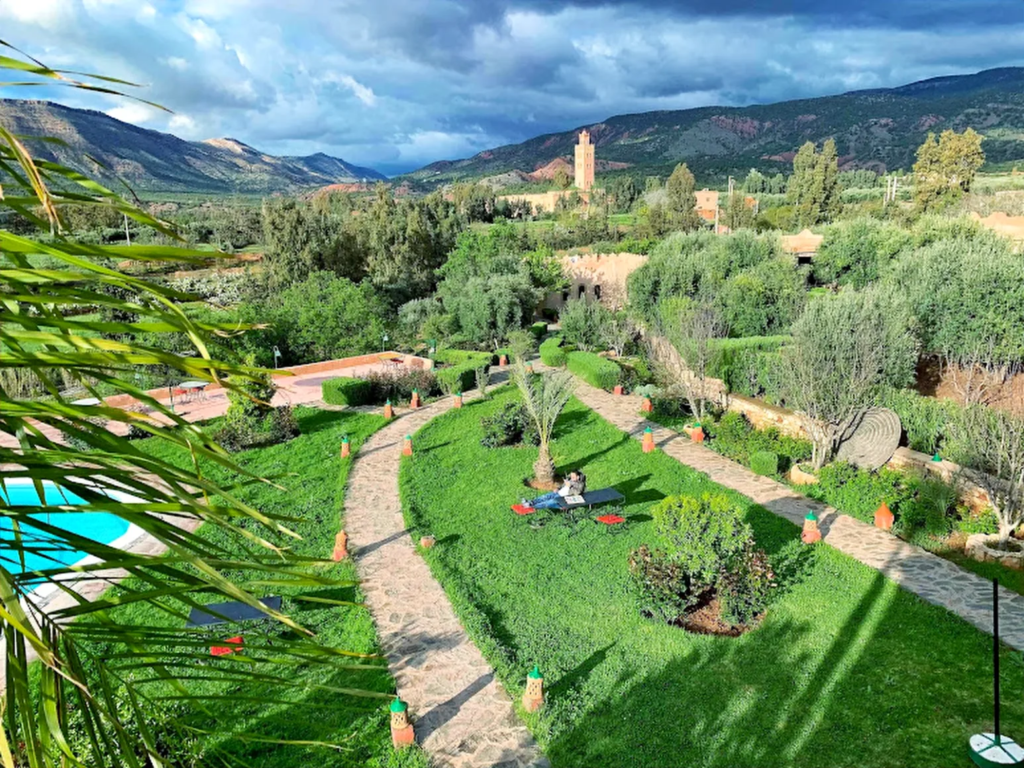
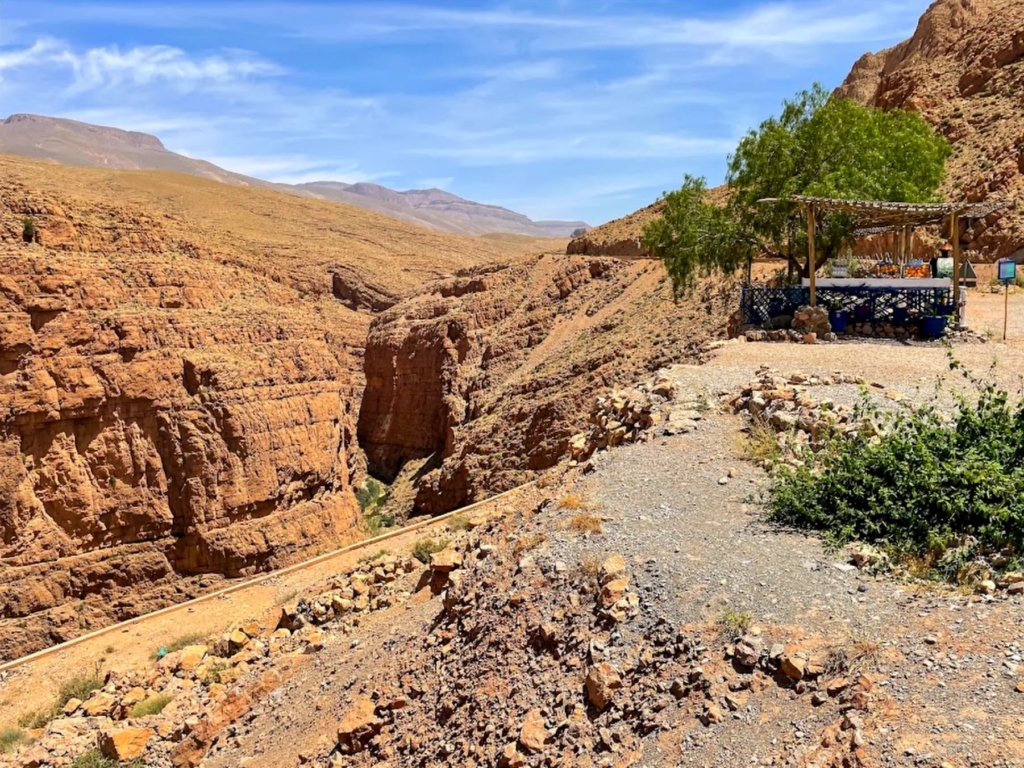
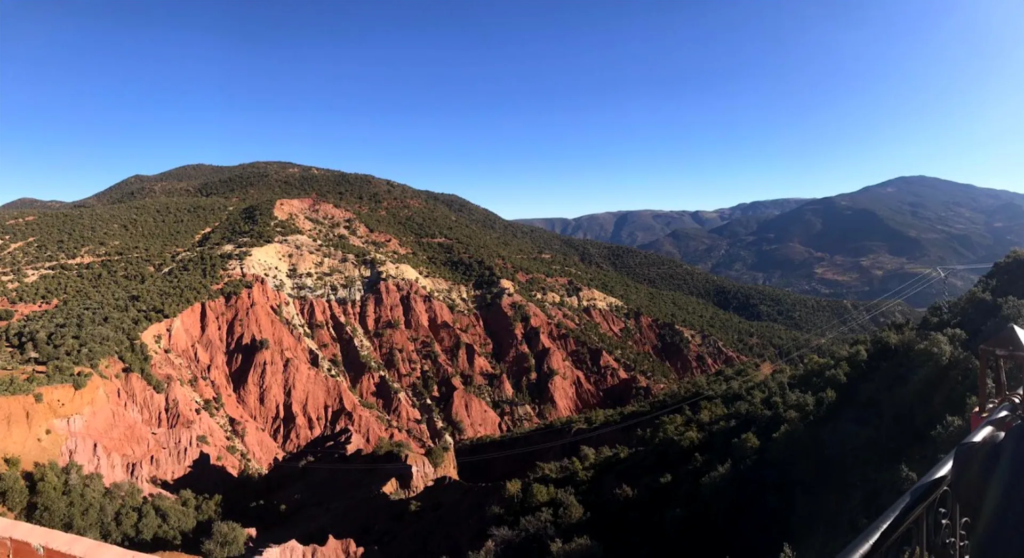
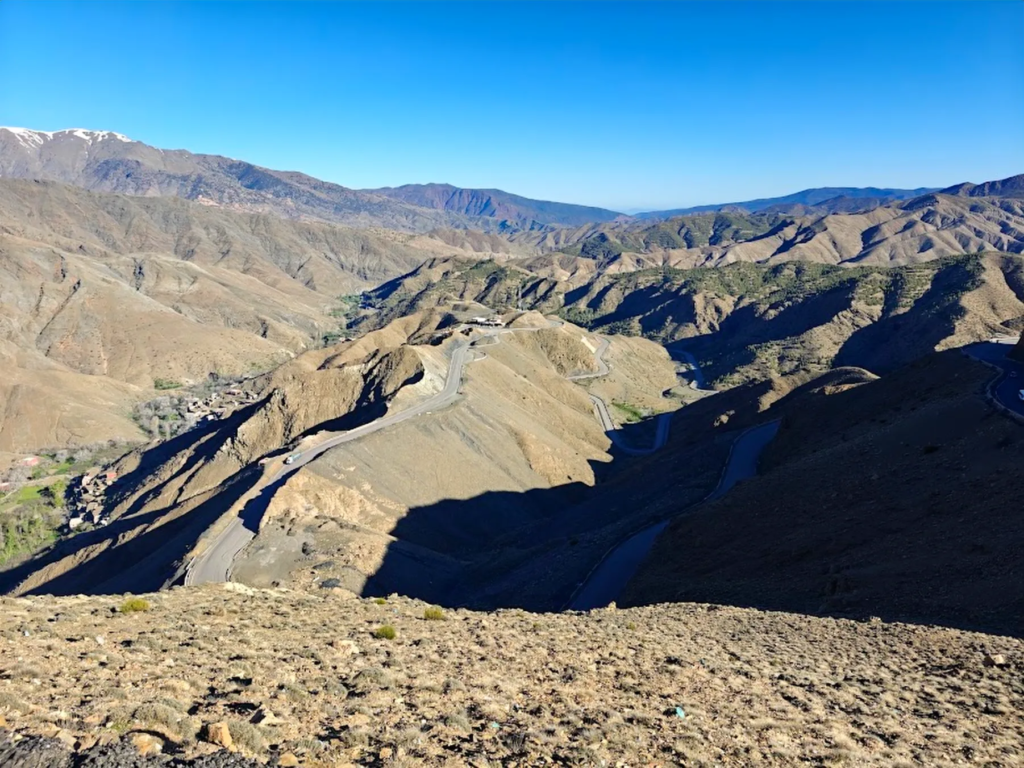
The High Atlas starts barely an hour from Marrakech, and it is where most people take their first steps on Moroccan trails. Imlil, at about 1,740 m and roughly 65 km from the city, is the main gateway to Toubkal National Park. From here footpaths fan out through terraced fields, past flat-roofed villages built from the same red earth as the slopes, and up to passes with views across range after range.
A typical day might follow the valley above Imlil to a village where lunch is a tagine cooked on a gas ring in someone’s courtyard, then climb a pass and descend to a gîte for the night. Mules and their muleteers carry the bags, so you walk with only a daypack. Further east, the Aït Bouguemez valley – often called the Happy Valley – offers greener, gentler walking and some of the friendliest villages in the mountains. Shorter village walks in the Ourika Valley suit anyone with a single free day.
If this is your first trek in the country, our blog post on 15 things you should know about trekking in Morocco covers mule logistics, water, tipping and village etiquette in more detail.
Climbing Mount Toubkal (4,167 m)
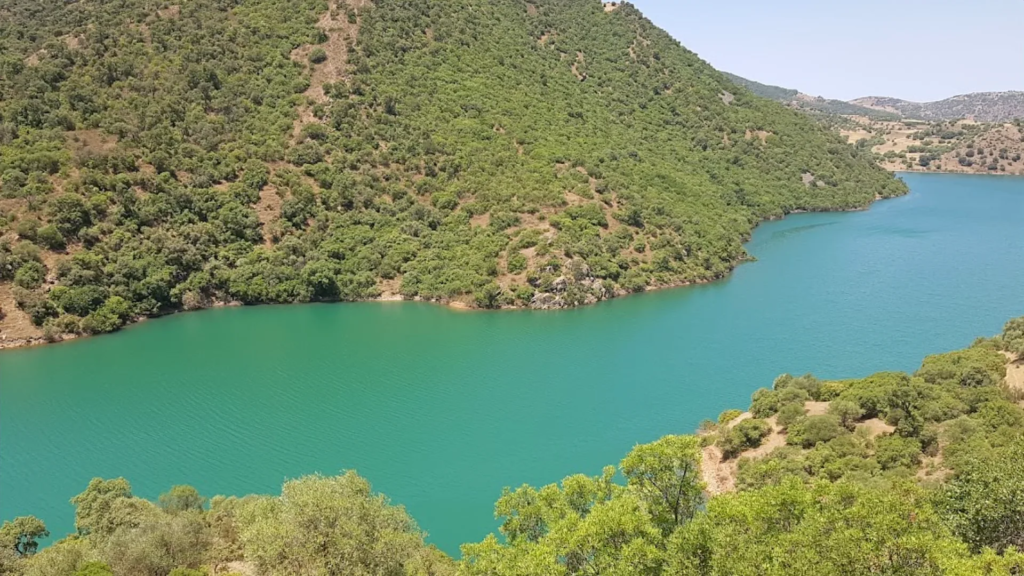
Toubkal is the highest peak in North Africa and the goal of many walkers who come to Morocco. It is not a technical climb in summer, but altitude and a long, stony final slope make it a real effort. Local rules require foreign hikers to climb with a licensed mountain guide, and we would recommend one regardless – the guide knows the weather, the path and when to turn back.
The classic ascent takes two days. On the first you walk from Imlil past the small shrine of Sidi Chamharouch to the refuge at around 3,200 m, usually five to six hours on foot. On the second you start before dawn, reach the summit in three to four hours and then descend all the way back to Imlil. A three-day version adds a night in the valley first to help with acclimatisation and is kinder if you are coming straight from sea level.
Between roughly November and April the upper mountain is under snow. Winter ascents need crampons, an ice axe and some winter mountaineering experience, and they depend on conditions on the day.
Rif trails around Chefchaouen
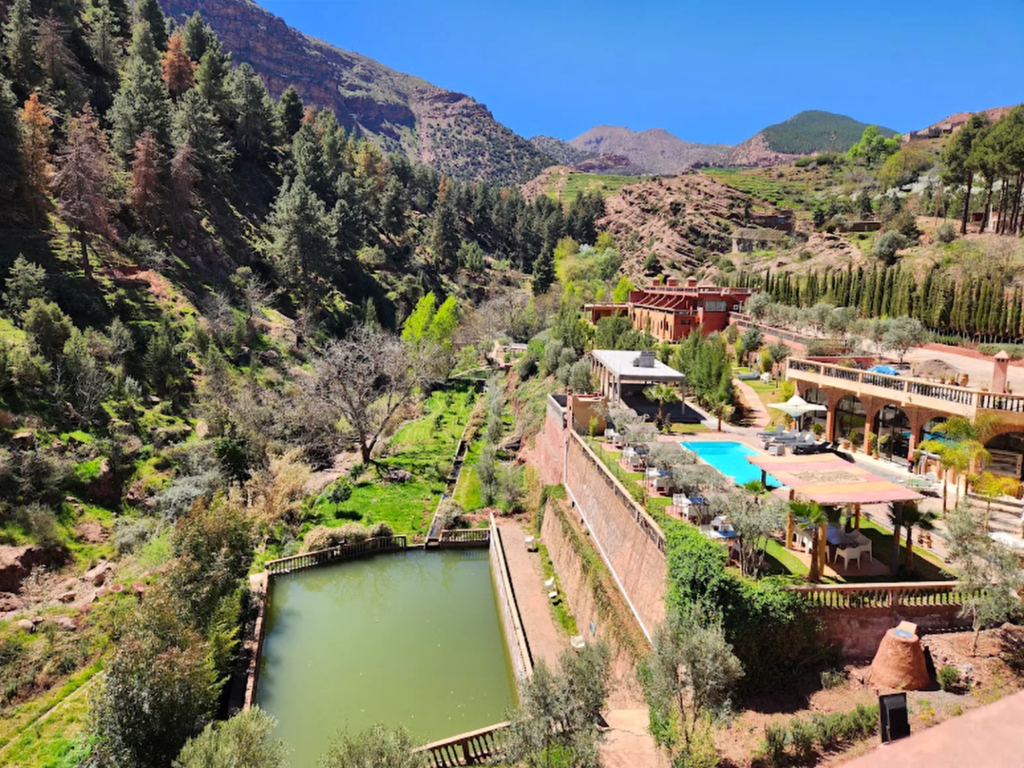
In the north, the Rif mountains offer a completely different kind of walking: limestone peaks, cedar and fir forest, and rivers that run all year. Chefchaouen, the blue town, makes a comfortable base. Day hikes climb the hills above the medina for views over the rooftops, while a longer outing in Talassemtane National Park leads to the Akchour waterfalls and the natural rock arch known as God’s Bridge.
Spring is the finest time here, when the waterfalls are full and wild flowers cover the meadows. Combine a couple of hikes with an afternoon wandering the town – our list of things to do in Chefchaouen will fill the rest of your stay.
Walking in the Sahara
Walking in the desert is slower and quieter than any camel ride or 4×4 trip. Around Merzouga you follow the curves of Erg Chebbi, whose dunes rise to about 150 m, with a local Amazigh guide and camels carrying water, food and bedding. Mornings and late afternoons are for walking; the middle of the day is for shade, tea and a long lunch. Sand is tiring underfoot, so distances are modest, but the silence at night is hard to forget.
Choose from a short Merzouga desert walk, a full 3-day trek in the Merzouga dunes or a camel-supported journey:
-
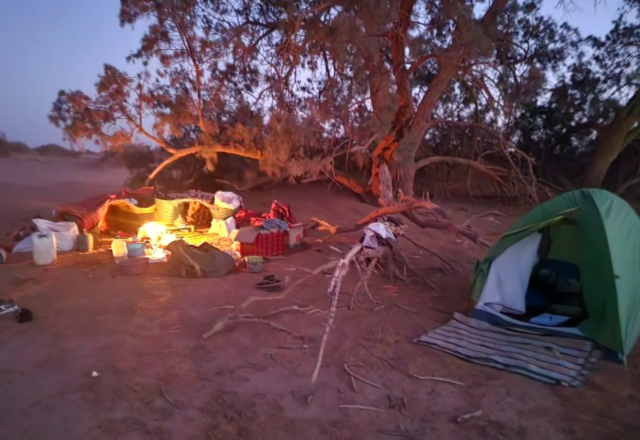 Private tour · 3 days · from Merzouga
3-Day Desert Trek in Merzouga with Wild Camping
-
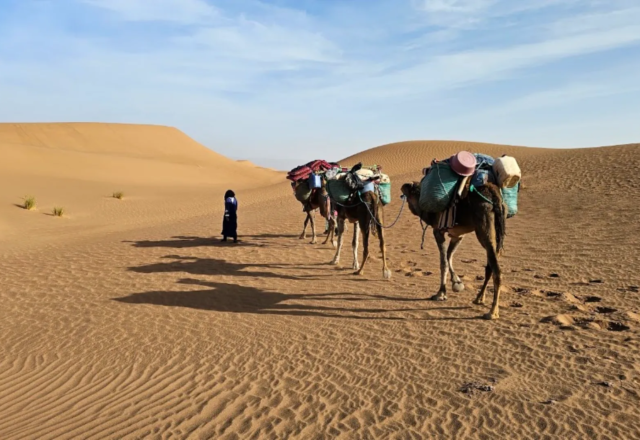 Private tour · 1 day · from Merzouga
1-Day Desert Walk in Merzouga (Erg Chebbi)
-
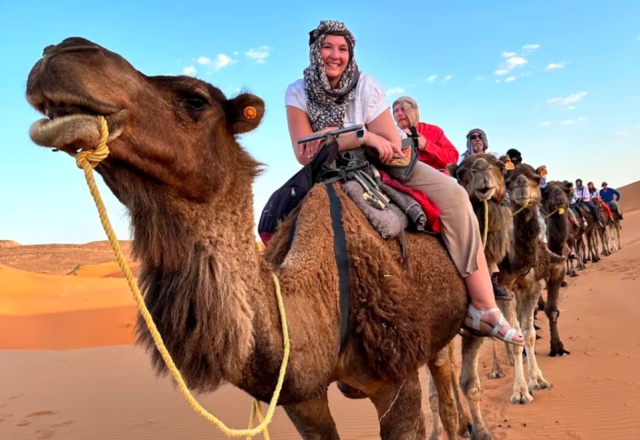 Private tour · Day trip
Merzouga Camel Trek & Night in a Desert Camp
For more routes on foot and by camel, browse our desert trekking and camel trekking collections.
Choosing your level
Most of our walkers are reasonably fit people who enjoy the outdoors rather than seasoned mountaineers. Be honest about your fitness when you contact us and we will match the route to it.
| Level | What to expect | Walking per day | Examples |
|---|---|---|---|
| Easy | Valley paths and gentle slopes, low altitude | 2–4 hours | Ourika or Imlil village walks, Merzouga desert walk |
| Moderate | Several days on foot, some climbs and descents | 5–6 hours | Atlas valley treks, Rif hikes, 3-day Sahara trek |
| Challenging | Long days, steep ground, altitude above 3,000 m | 6–9 hours | Mount Toubkal ascent, high Atlas passes |
Pack for the trail
- Broken-in walking boots and a light pair of shoes for the evenings.
- Layers: mountain mornings and desert nights are cold even when afternoons are hot.
- Sun hat, sunglasses and high-factor sun cream.
- A refillable bottle and purification tablets or a filter.
- Modest clothing for village visits – see our guide on what to wear in Morocco.
When to hike in Morocco
Each region has its own rhythm, and the right month depends as much on where you walk as on how high you go.
| Region | Best months | Take care | Notes |
|---|---|---|---|
| High Atlas valleys | April–June, September–October | Snow on high passes in winter | Summer is pleasant at altitude when Marrakech is hot |
| Mount Toubkal | Late May–October for a snow-free climb | November–April: snow and ice | Winter ascents need crampons and an ice axe |
| Rif around Chefchaouen | March–June, September–November | Heavy rain possible in winter | Waterfalls fullest in spring |
| Sahara, Merzouga | October–April | June–August: extreme heat | Nights are cold from November to March |
For national holidays and regional events that might affect your dates, the official Visit Morocco site is worth a quick look.
Frequently asked questions
Do I need a guide to climb Mount Toubkal?
Yes. Foreign hikers must be accompanied by a licensed mountain guide on Toubkal. We arrange one as part of every tailor-made Toubkal trek.
How fit do I need to be for the Toubkal ascent?
You should be comfortable walking six to eight hours on steep, rocky ground. Regular hill walking in the months before your trip makes a big difference, and the three-day version gives more time to adjust to altitude.
Can I book an Atlas or Rif trek online?
Mountain treks are planned individually, so send us your dates, group size and level and we will reply with a free quote. Sahara walks can be booked online straight away with a 10% deposit.
Where do we sleep on a trek?
In the Atlas, usually in village gîtes or family homes and, on Toubkal, in a mountain refuge. In the Sahara you sleep in a desert camp or a simple bivouac under the stars.
Is it possible to hike with children?
Yes. Short Atlas village walks and the Merzouga desert walk work well for families, and a mule can carry tired legs for part of the way. We would not recommend Toubkal for young children.
Tell us where you would like to walk and how much effort you are after. Book a Sahara trek above, ask for a tailor-made Atlas or Rif trek, or get in touch with our team on WhatsApp at +212 673 55 54 08 or by email at nomalortravel@gmail.com.