Is Morocco Safe for Solo Female Travelers? Honest Insights and Safety Tips
Every few weeks a message lands in our Marrakech office that starts the same way: a woman planning her first trip alone, asking us straight out, is Morocco safe for solo female travelers? We always give the same honest reply. Yes, it is, and thousands of women travel here alone every year without a serious problem. But it is not a country where you will glide through unnoticed, and the people who enjoy it most are the ones who arrive knowing what the street will throw at them.
This guide is what we tell solo female travellers over mint tea before they head into the medina: what the hassle actually looks like, how to shut it down politely, which transport to trust, and where to sleep so that walking home after dinner feels easy rather than tense.
Quick answer
Morocco is generally safe for women travelling alone. Violent crime against tourists is rare; the main issues are verbal harassment, persistent vendors, fake guides and petty theft in crowded places. Dress modestly, walk with purpose, use a firm “La, shukran” (no, thank you), take metered petit taxis or CTM buses, and book a centrally located riad with good reviews from other women.
The honest picture: what solo women really experience
Let us be clear about where the risk sits. Serious incidents involving foreign women are uncommon, and Moroccan police take crimes against tourists seriously; Marrakech, Fes and the other big tourist cities have a dedicated tourist police presence. Both the UK Foreign Office travel advice for Morocco and the US State Department country page mention harassment of women, and both are worth reading before you go. For the wider view on crime, scams and health, see our general guide to whether Morocco is a safe place to visit.
What you will almost certainly meet is attention. Comments as you pass, men trying to start a conversation, shopkeepers calling “Gazelle!” or guessing your nationality in four languages. Most of it is noise rather than threat. It is tiring, though, and on day three in the Fes medina it can wear down even experienced travellers. Knowing that in advance is half the battle.
The flip side rarely gets written about. Moroccan women will often step in if a man oversteps, older shopkeepers tell younger ones to back off, and families on trains will share their bread and oranges with you. Hospitality here is real.
Understanding street dynamics
Catcalling and unwanted comments
Catcalling is the most common complaint we hear, and it is worst in the narrow lanes around Jemaa el-Fna in Marrakech, the main arteries of the Fes medina such as Talaa Kebira, and around the port in Tangier. It ranges from a muttered “bonjour, madame” to a running commentary on your appearance. Physical contact is much rarer, but crowded souks do give cover for the occasional grope.
The local approach is simple: do not engage. Moroccan women walking through the same streets keep their eyes forward and keep moving, and that is what works best for visitors too. Sunglasses help. Earbuds (with no music playing, so you stay aware) help more. If someone does touch you or follows you, make a scene. Raising your voice and saying “Hshuma!” (shame on you) draws exactly the attention a harasser does not want, and bystanders will usually step in.
Vendor persistence in the souks
Shopkeepers in Marrakech and Fes are persistent with everyone, but a woman alone is seen as an easier sale. Expect “Just looking is free”, “Where are you from?” and the hand on the shoulder steering you towards a carpet shop.
You are not being rude. A smile, a “La, shukran” and continuing to walk is the accepted script, and most vendors drop it after a few steps. If you do want to buy, our guide on how to bargain in Moroccan souks explains how to haggle without getting stuck in a two-hour tea ceremony you never wanted.
Fake guides and “helpful” strangers
This is the hustle most likely to cost you money and patience. A young man falls into step beside you and tells you the road ahead is closed, the square is “that way”, the tannery is only open today, or there is a Berber market you must not miss. He then walks you somewhere you did not intend to go, usually a shop or a tannery terrace where a hefty “tip” is suddenly expected. In Marrakech this happens constantly on Rue Riad Zitoun el Jdid and around the Mellah; in Fes, near Bab Bou Jeloud and the Chouara tannery.
The road is almost never closed. Keep walking, check your map, and if you are lost, ask a woman, a family or a shopkeeper sitting inside his shop rather than someone loitering at a junction. Download offline maps before you arrive, as GPS is unreliable in the tightest lanes. Unofficial guiding is illegal in Morocco, and a licensed guide carries an official badge. Many solo women book a licensed guide for their first half-day in the medina, which we strongly recommend; our Marrakech tours include guided medina walks that also show you the shortcuts you will use for the rest of your stay.
What to wear
Clothing does not prevent harassment, but it does change the volume. Loose trousers or long skirts, tops covering the shoulders, and a light scarf for mosques and mountain villages will get you noticeably fewer comments than shorts and a vest top. We cover fabrics, season by season, in our guide on what to wear in Morocco.
Useful phrases and projecting confidence
Moroccans switch easily between Darija (Moroccan Arabic), French, Amazigh languages and, in tourist areas, English and Spanish. You do not need fluency. A handful of words, delivered calmly and without stopping, tells people you are not a first-timer, and that alone thins out the hustlers.
| Phrase | Language | Meaning and when to use it |
|---|---|---|
| La, shukran | Darija | No, thank you. Your all-purpose reply to vendors and would-be guides. |
| Safi | Darija | Enough / that is fine. Useful for ending a conversation. |
| Ana ma bghitsh | Darija | I don’t want it. Firmer than “La, shukran”. |
| Hshuma! | Darija | Shame! For anyone who crosses the line. Say it loudly. |
| Non merci, je connais le chemin | French | No thanks, I know the way. Ideal for fake guides. |
| Laissez-moi tranquille | French | Leave me alone. Direct, and widely understood. |
| Salam alaykum / Bslama | Darija | Hello / goodbye. Courtesy goes a long way with shopkeepers and riad staff. |
Confidence matters more than vocabulary. Walk as if you know where you are going, even when you do not. If you need to check your phone, step into a shop or café rather than stopping in the middle of a lane. Keep answers short: “Where are you from?” is an opening line, and you do not owe anyone your hotel name, your plans for the evening or your relationship status.
Transport tips for women travelling alone
Petit taxis in town
Petit taxis are the small, colour-coded city cabs (beige in Marrakech, red in Fes and Casablanca, blue in Rabat and Tangier). They are cheap and generally safe, and you can flag them down day or night. Sit in the back. Ask for the meter (“le compteur, s’il vous plaît”) before the car moves; if the driver refuses, get out and take the next one. A daytime ride within Marrakech is typically around 15–30 MAD (about €1.50–3); fares rise by roughly half in the evening.
Airport arrivals are where overcharging peaks. If you land late at Marrakech Menara, ask your riad to send a driver; it costs a little more but someone will be waiting with your name and will walk you to the door, which matters in a medina with no street numbers.
CTM and Supratours buses
For travel between cities, CTM and Supratours are the two reliable companies: assigned seats, luggage tags, air conditioning and official stations. Marrakech to Essaouira takes around 3 hours and costs roughly 90–110 MAD; Marrakech to Fes is a long 8–9 hours. Book a seat near the front, by the window, and if a man sits beside you and makes you uncomfortable, tell the conductor; reseating is routine. Avoid the cheaper local buses on long routes, especially at night. Our guide to getting around Morocco compares buses, trains and grand taxis in detail.
Trains, grand taxis and the desert
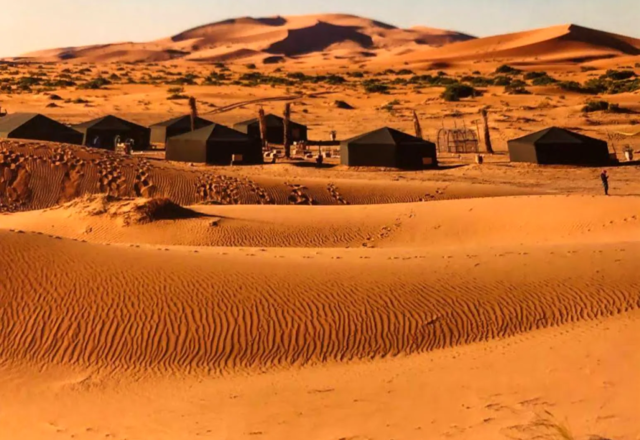
ONCF trains are comfortable and well used by Moroccan women travelling alone. First class costs a little more and is usually quieter. For the Sahara, a 9–10 hour drive from Marrakech to Merzouga is not something we suggest piecing together on public transport alone. Plenty of solo women join our small group tours for exactly this reason, or book a private driver if they prefer their own pace.
Where to stay: riads, location and reviews
Where you sleep shapes how safe you feel more than anything else. A riad is a traditional house built around a courtyard, with a locked front door, staff on site and often a rooftop terrace. For a woman alone they are ideal: someone always knows when you go out and come back, and staff will walk you to a restaurant or collect you from the nearest taxi drop-off.
Location is the real decision. In Marrakech, pick a riad within 10 minutes’ walk of Jemaa el-Fna or near Bab Ksour and Dar el Bacha rather than deep in a residential quarter, where lanes are dark and empty after 10pm. In Fes, the area around Bab Bou Jeloud and the upper Talaa Kebira is the easiest to reach. Read reviews from other solo women specifically, and look for mentions of the walk home at night. Our guide on riads versus hotels in Morocco covers the trade-offs, and our team is always happy to suggest places we have vetted ourselves.
A couple of honest downsides. Some riads have rooms opening directly onto the courtyard with thin doors, so ask for an upstairs room if privacy matters. Mid-range riads in Marrakech typically run about 600–1,200 MAD (€55–110) a night, and the cheapest hostel-style options may not have 24-hour reception. If arriving late, confirm someone will be awake to let you in.
After dark and other practical tips
Jemaa el-Fna is lively and crowded until late, and the main streets around it are fine in the evening. Problems tend to start when you leave the lit routes for quiet derbs after 10 or 11pm. Plan your route home before dinner, or ask the restaurant to call a taxi or your riad to send someone.
Carry a cross-body bag that zips, keep your phone out of your back pocket, and do not wave large notes around in the souk. Buy a local SIM on arrival (Maroc Telecom, Orange and inwi all have airport desks) so you can call your riad or a taxi at any time. Save these numbers: police 19, Gendarmerie Royale 177 outside cities, ambulance 15.
Solo Female Traveler Safety Checklist
- Read the current UK or US travel advice for Morocco before you book.
- Pack loose, shoulder-covering clothes and a light scarf.
- Book a well-reviewed riad close to a main gate or square, and arrange an airport pickup if landing after dark.
- Download offline maps and buy a local SIM on arrival.
- Practise “La, shukran”, “Safi” and “Non merci, je connais le chemin”.
- Ignore anyone who says a road is closed; ask women, families or seated shopkeepers for directions.
- Use metered petit taxis, sit in the back, and insist on the meter.
- Take CTM or Supratours buses or ONCF trains between cities, not night local buses.
- Share your itinerary and riad address with someone at home.
- Save emergency numbers: police 19, gendarmerie 177, ambulance 15.
- Trust your instincts: leave, step into a shop, or say “Hshuma!” loudly.
Frequently asked questions
Is Morocco safe for solo female travelers?
Yes, for most women it is. Violent crime against tourists is rare. Expect verbal harassment, persistent vendors and fake guides, especially in Marrakech, Fes and Tangier, and plan your accommodation and transport so you are not walking quiet lanes late at night.
Which Moroccan cities are easiest for women travelling alone?
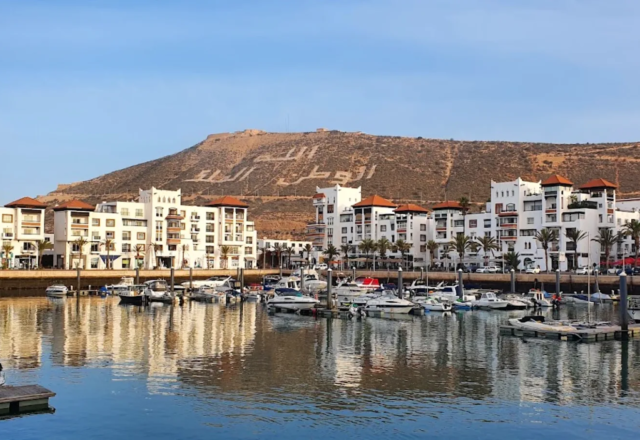
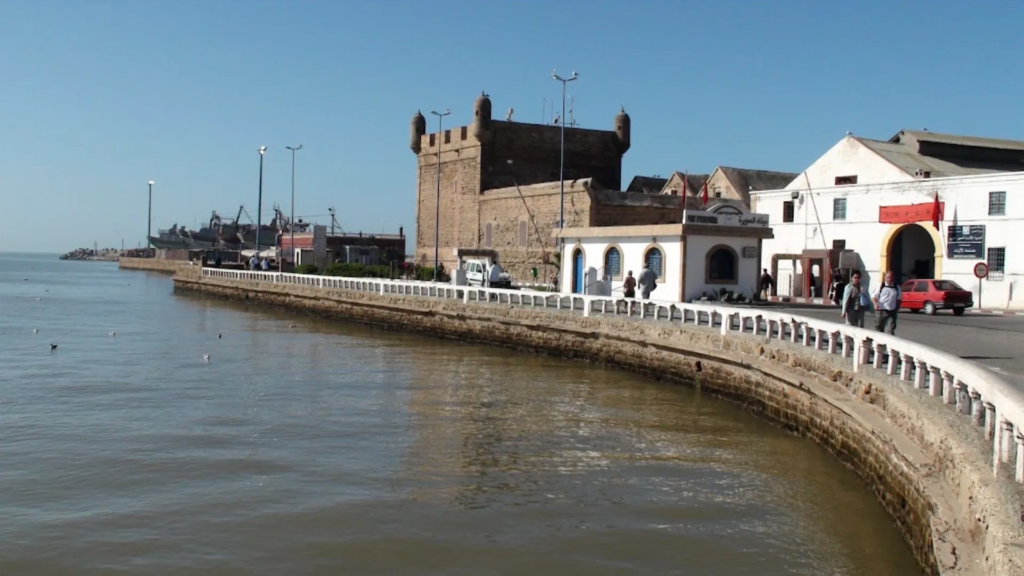
Essaouira, Chefchaouen, Rabat and Agadir are noticeably calmer. Marrakech and Fes are fine but more intense, so many women start somewhere quieter or book a guided first day in the medina.
Do I need to cover my hair in Morocco?
No. Moroccan law does not require it and many Moroccan women do not. Carry a scarf for mosques open to visitors and conservative villages, and dress modestly to reduce attention.
Is it safe to take a desert tour alone as a woman?
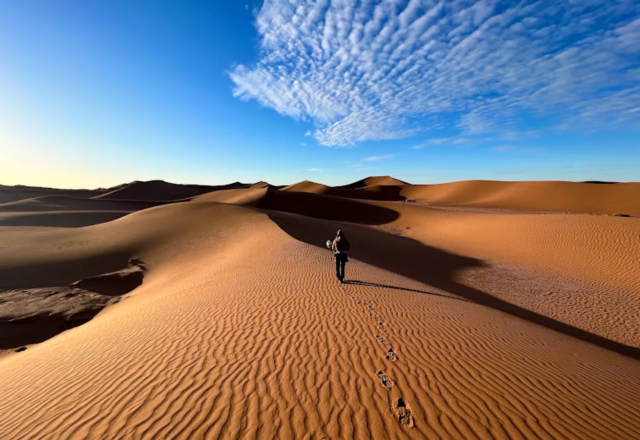
Yes, if you go with a licensed, well-reviewed operator. Small group tours are popular with solo women because you share the journey and the camp with other travellers, and you have a named driver and guide throughout.
Are taxis in Morocco safe at night?
Official petit taxis are generally safe. Sit in the back, insist on the meter, and for late airport arrivals ask your riad to arrange a driver instead.
What should I do if I am harassed?
Do not engage, keep walking and head for a shop, café or busy area. If someone follows or touches you, say “Hshuma!” loudly, ask bystanders for help and report it to the tourist police or call 19.
Travelling alone in Morocco is rewarding, and a little local backup makes it easier. If you would like a trusted driver, a licensed medina guide or a full itinerary built around travelling solo, have a look at our private Morocco tours or get in touch with our Marrakech team and we will help you plan it.