What to Wear in Morocco: A Practical Packing Guide for Respectful Travel
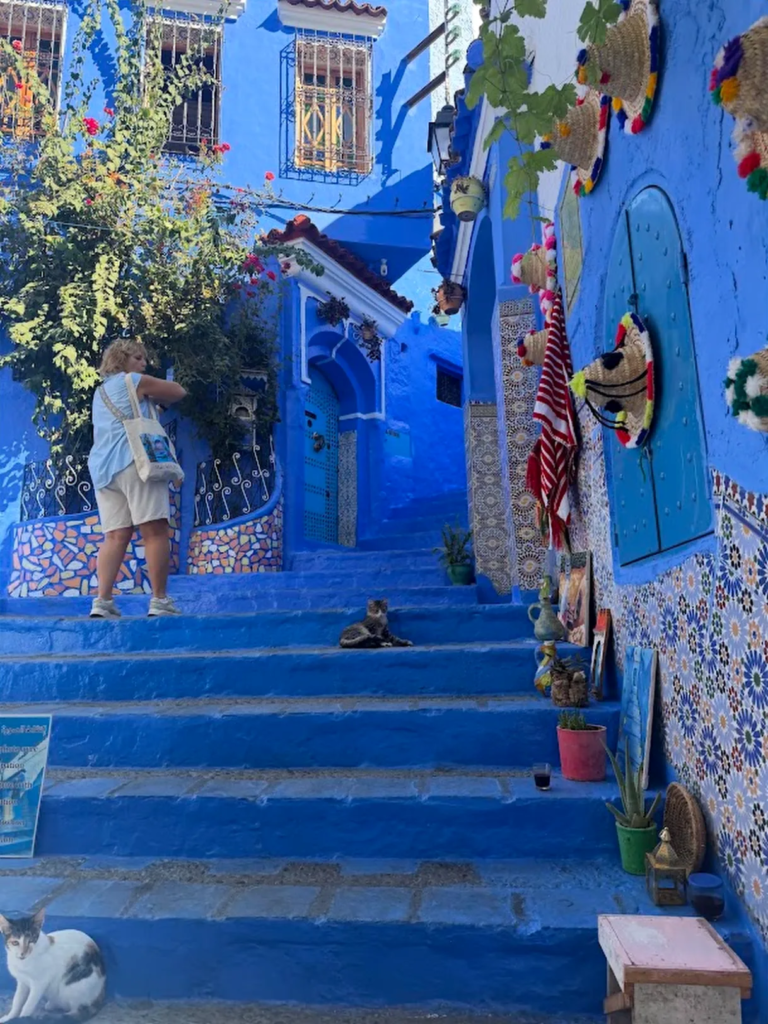
The question we get most often after someone books a trip with us is not about camels or tagines. It is about clothes. Working out what to wear in Morocco worries people more than it should, partly because the advice online swings between “cover everything” and “wear whatever you like”. The truth sits in the middle, and it shifts as you move between the Fes medina, a beach bar in Taghazout or a Berber village at 1,800 metres in the High Atlas.
We have spent years watching travellers step off the plane at Marrakech Menara in August wearing a puffer jacket, and others shivering in Merzouga in January in a linen shirt. This guide is the packing talk we give our own guests, place by place and season by season.
In short
Dress modestly but comfortably: cover shoulders and knees in medinas, villages and religious sites, and choose loose, breathable fabrics. Shorts and swimwear are fine at resorts and tourist beaches. Always pack a warm layer, because desert nights and mountain winters get properly cold.
Cultural norms: medinas, villages and modern resorts
Morocco is a Muslim country, but a relaxed and outward-looking one. Nobody will fine you for bare shoulders, and there is no dress code enforced by law for visitors. What you wear simply affects how people read you, how much attention you get and how welcome you feel in more traditional places.
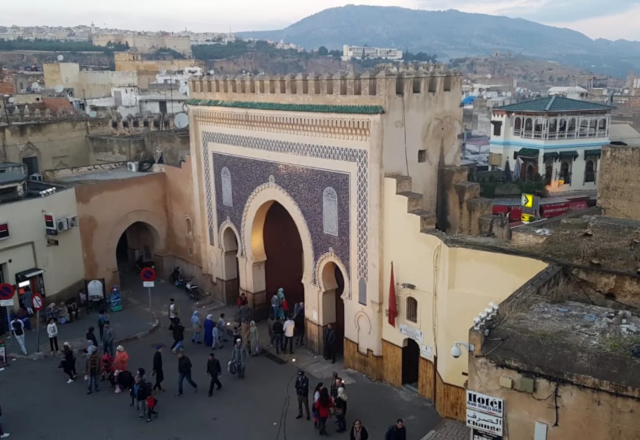
A useful rule of thumb: look at what Moroccans of your age and gender are wearing in the same place, then go one notch more covered. In Gueliz, the modern district of Marrakech, young Moroccan women wear skinny jeans and T-shirts, and plenty go without a headscarf. In Casablanca’s Maarif quarter you will see more of the same. Walk ten minutes into the old medina of Fes, though, and the dress code becomes noticeably more conservative.
Where modesty matters most
- Old medinas: Fes el-Bali, Meknes, the quieter lanes of the Marrakech medina away from Jemaa el-Fna. Shoulders and knees covered is the norm.
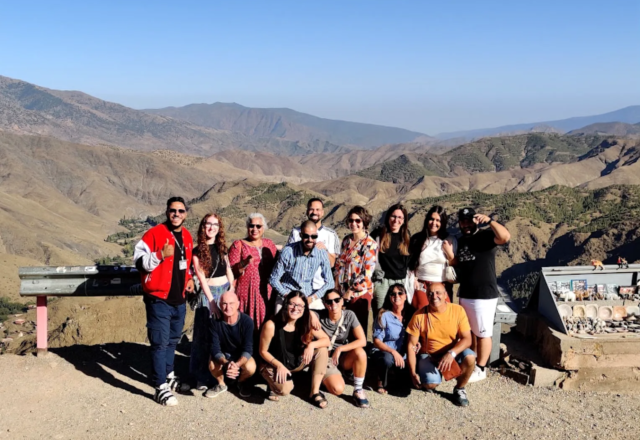
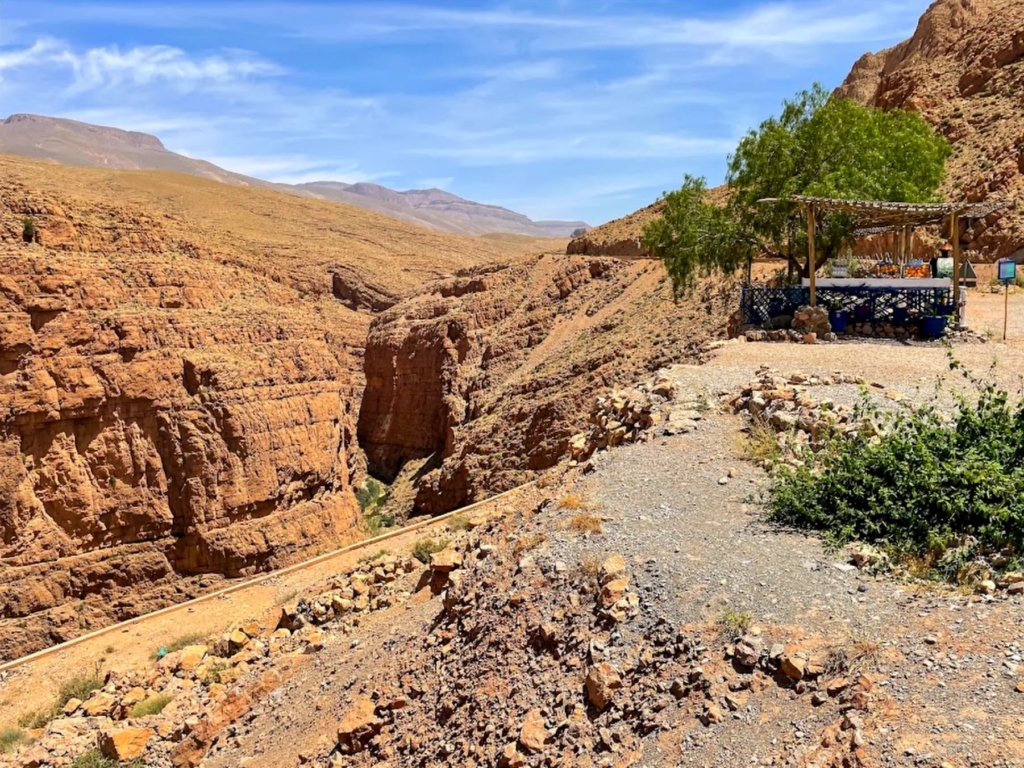
- Rural villages: the Ourika and Imlil valleys, the Dades Gorge, the Draa Valley. Families here are hospitable and conservative; long trousers and covered shoulders show respect for both men and women.
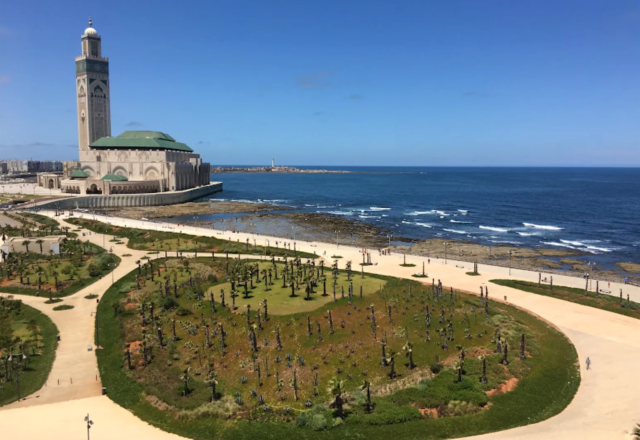
- Religious sites: most mosques are closed to non-Muslims. The big exception is the Hassan II Mosque in Casablanca, which runs guided tours. Arms and legs must be covered there, and women are asked to bring a scarf for their hair.
- During Ramadan: the whole country leans a little more conservative. Dress one step more covered than usual.
Where you can relax
Inside your riad, at a hotel pool, in Palmeraie resorts and on tourist beaches in Agadir, Taghazout and Essaouira, swimwear and shorts are completely normal. The trick is the walk between: throw a kaftan, shirt or sarong over your swimsuit before you head back through town. Topless sunbathing is not acceptable anywhere in Morocco.
One honest point. Modest clothing reduces unwanted comments, especially for women, but it does not stop them entirely. We cover that in more depth in our guide on whether Morocco is safe for solo female travellers, and the official UK travel advice for Morocco also has a section on local laws and customs worth reading before you go.
What to pack for women
The good news is that the clothes that suit Moroccan culture are also the clothes that suit Moroccan heat. Loose fabric that skims the body keeps you cooler than a vest top and shorts, and it protects your skin from a sun that is fierce from April onwards.
The core pieces
- Two or three maxi dresses or midi skirts. Cotton or viscose, ideally with sleeves to the elbow or a cardigan over the top. They work in the souks, at dinner on a rooftop and in a desert camp.
- Linen or wide-leg cotton trousers. The most useful item in the bag. Wear them on long drives over the Tizi n’Tichka pass, in the medina and on easy walks.
- Tops that cover your shoulders. Loose T-shirts, short-sleeved blouses and long-sleeved linen shirts. Avoid low necklines in rural areas. Nothing needs to be shapeless, it just should not be tight or very short.
- One or two lightweight scarves. This is the single item we recommend most. A scarf covers your shoulders when you walk into a village, keeps dust off your face on a camel ride, covers your hair at the Hassan II Mosque and doubles as a light blanket on an air-conditioned train.
- A light cardigan or kimono. Handy for turning a sleeveless dress into something suitable for the medina in five seconds.
You do not need to cover your hair outside mosques. Some women choose to wear a scarf loosely in the more traditional medinas because it reduces attention, but that is personal choice, not an expectation.
If you forget something, buy it here. In the Marrakech souks a cotton scarf costs roughly 30 to 80 MAD (about €3 to €8), and a simple cotton djellaba or kaftan around 150 to 400 MAD (about €15 to €40), depending on fabric and how well you haggle. Our guide to bargaining in Moroccan souks will help you avoid paying three times the going rate.
What to pack for men
Men have an easier time, but the same principles apply. The main thing to rethink is shorts.
The core pieces
- Chinos or lightweight trousers. Two pairs in neutral colours cover almost every situation, from a riad dinner to a mountain village.
- Breathable shirts. Linen or cotton, short or long sleeved. A long-sleeved linen shirt is far more comfortable in 38°C sun than a tight T-shirt, and it looks smarter in restaurants.
- Plain T-shirts. Fine almost everywhere. Skip vests and sleeveless gym tops outside the beach or pool.
- One pair of shorts. For the pool, the beach and hikes in tourist areas.
Shorts etiquette
In Marrakech’s main medina, Gueliz and coastal towns, knee-length shorts are common on male tourists and rarely draw a second look. In non-tourist areas, smaller towns and villages, Moroccan men almost never wear shorts, and you will stand out. Short running shorts and walking shirtless through town are the real no-gos. We usually tell our travellers: shorts for the beach and the hotel, trousers for everything else.
Seasonal essentials
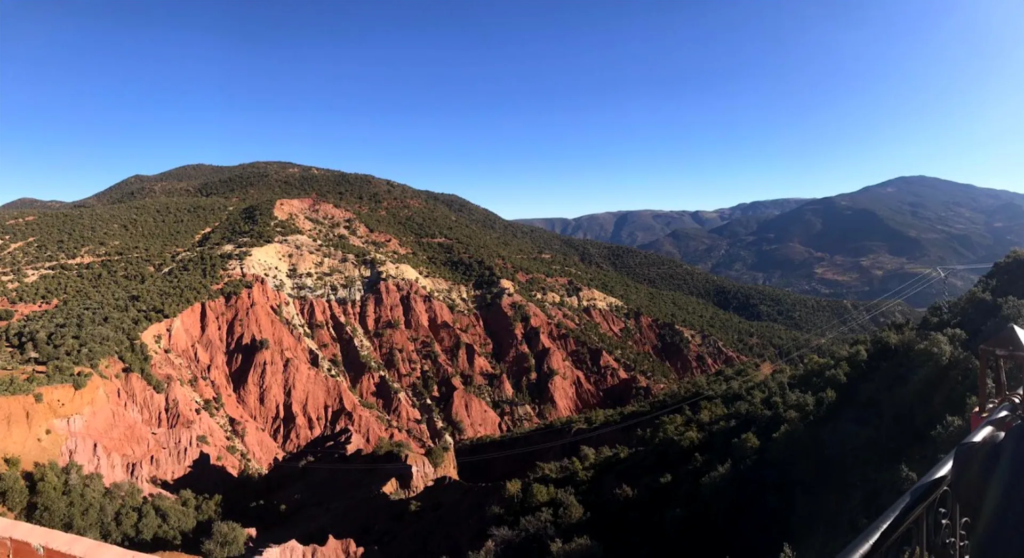
Morocco’s climate surprises people. It is not hot everywhere all year. Marrakech can top 40°C in July, while the Sahara dips close to freezing on a clear January night and the High Atlas is under snow from roughly December to March. Plan your bag around where you are going and when. Our guide to the best time to visit Morocco breaks down the weather month by month.
| Season | Typical conditions | What to pack |
|---|---|---|
| Summer (June–August) | Marrakech and Fes often 38–45°C; desert hotter; coast mild and windy | Loose linen, wide-brim hat, sunglasses, high-SPF sunscreen, light scarf for sun and dust |
| Autumn (September–November) | Warm days, cooler evenings; first chilly desert nights from late October | Light layers, one fleece, comfortable trousers |
| Winter (December–February) | Sunny days around 18–20°C in Marrakech; desert and mountain nights near or below 0°C | Warm jacket, thermal base layer, beanie, warm socks, closed shoes |
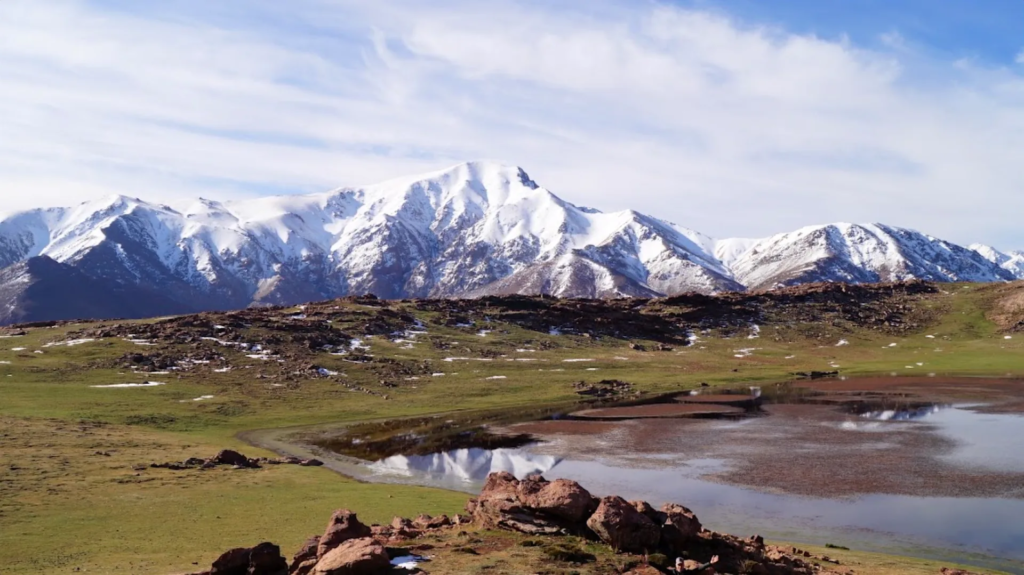
| Spring (March–May) | Pleasant days, cool nights; snow still on high Atlas peaks into April | Layers, light rain jacket, a fleece for the desert |
Summer heat
In summer, cotton and linen beat synthetics every time. A hat is not optional if you are walking around Jemaa el-Fna at midday, and neither is water. Light colours help. Riads stay surprisingly cool behind their thick walls, but expect to dash between shade.
Cold desert nights
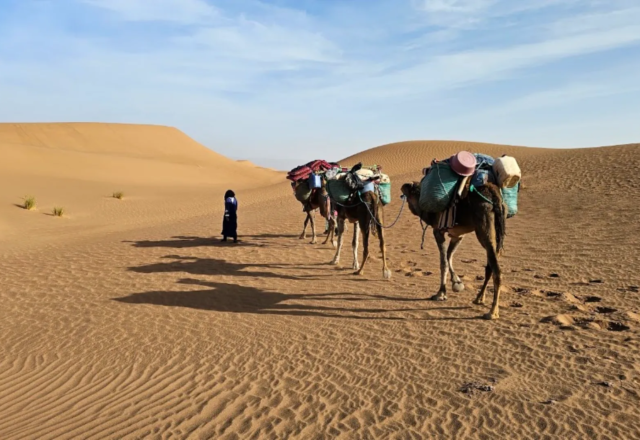
This is the one people get wrong. On our Morocco desert tours, the daytime sun at Erg Chebbi can feel like summer even in December, then the temperature drops sharply after sunset. Between November and February we tell every guest heading out on the 3-day Marrakech to Merzouga desert tour to pack a proper warm jacket, a hat and socks for sleeping. Desert glamping tents have blankets, and many now have heating, but the walk to the fire and the dawn climb up the dunes are cold.
For the camel ride, wear long trousers (bare legs chafe against the saddle) and keep a scarf handy for wind and sand. Sandals are fine on the dunes; leave white trainers at the hotel unless you like orange shoes.
Mountain winters and hiking
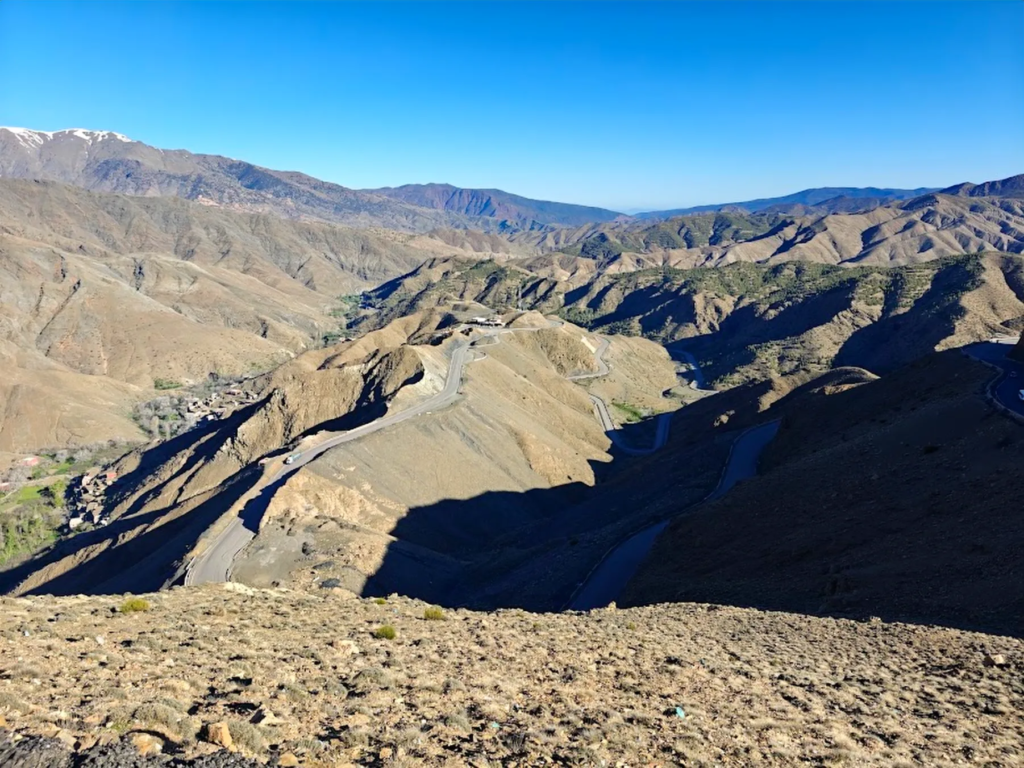
The High Atlas is serious mountain terrain. Imlil sits at around 1,740 metres and Jbel Toubkal at 4,167 metres. In winter, routes above the villages can need crampons and an experienced guide. Even in summer, nights in a mountain gîte are cool. Bring broken-in walking boots, a waterproof layer, a fleece and a warm hat. Our article on trekking in Morocco covers the gear in more detail.
Coastal towns
Essaouira is famous for its wind, which can make a sunny July afternoon feel chilly. A windproof jacket earns its place. Taghazout and Agadir are more relaxed about dress than inland cities: board shorts, bikinis and surf gear on the beach are normal, but cover up when you head into the village for lunch.
5 Must-Pack Essentials for Morocco
- A lightweight scarf: shoulders, hair, sun, sand and cold trains, all in one.
- Loose long trousers or a maxi skirt: respectful, cool and comfortable for long drives.
- A warm layer: a fleece or packable down jacket for desert nights and the Atlas, even if you travel in spring or autumn.
- Comfortable closed shoes: medina lanes are uneven, slippery in places and shared with donkeys and motorbikes.
- Sun protection: wide-brim hat, sunglasses and high-SPF sunscreen, which is pricier and harder to find outside the big cities.
Shoes, bags and the small things
Footwear matters more than most people expect. The medinas of Fes and Marrakech are cobbled, polished smooth in places and often wet near the dyers’ and tanners’ quarters. Flimsy flip-flops are a bad idea. We recommend one pair of comfortable walking shoes, one pair of sturdy sandals and, for hikers, proper boots.
A cross-body bag with a zip is better than a backpack in crowded souks. If you plan to visit a hammam, a swimsuit or underwear you do not mind getting soaked is useful, along with flip-flops; our Moroccan hammam guide explains the etiquette. Riad dinners are casual, but a slightly smarter outfit is welcome at the more upmarket restaurants in Marrakech.
Finally, leave space in your bag. Most of our guests fly home with babouche slippers (roughly 100 to 250 MAD, about €10 to €25), a scarf or two and sometimes a full kaftan. Buying some of your wardrobe here is half the fun.
A quick word on a common mistake
A few years ago we picked up a couple from Marrakech for a trip through the Dades Valley. She had packed only strappy summer dresses, he had only shorts. Nothing wrong with that by the coast, but on our first stop at a village near Ait Ben Haddou the local women went quiet and the children stared. A 60-dirham scarf from a roadside stall and a pair of cheap trousers from the Ouarzazate market fixed it within the hour, and the rest of the trip was easy. Nobody had been rude. They had just felt out of place, and so had our guests.
That is really the whole point. Dressing modestly in Morocco is less about rules and more about feeling comfortable and being treated as a guest rather than a spectacle.
Frequently asked questions
Do women have to cover their hair in Morocco?
No. Female visitors do not need to cover their hair anywhere except inside a mosque, such as on a guided tour of the Hassan II Mosque in Casablanca. Many Moroccan women do not wear a headscarf either.
Can I wear shorts in Marrakech?
Men can wear knee-length shorts in the main tourist areas of Marrakech without problems. Women in shorts will attract more attention, especially in the medina. Long trousers or a skirt below the knee are more comfortable for everyone.
Can I wear a bikini in Morocco?
Yes, at hotel and riad pools and on tourist beaches in Agadir, Taghazout and Essaouira. Cover up with a dress, shirt or sarong when you leave the beach. Topless sunbathing is not acceptable.
What should I wear in the Sahara Desert?
Loose long trousers and a long-sleeved top for the camel ride, a scarf for sun and sand, and sandals or light shoes. From October to March pack a warm jacket, a hat and warm socks, as nights can drop close to freezing.
Are leggings acceptable in Morocco?
Leggings are fine under a long top, tunic or dress that covers your bottom. On their own, with a short top, they will be seen as revealing in the medinas and villages.
Is it cold in Morocco in winter?
Days in Marrakech are often sunny and mild, around 18 to 20°C, but evenings are cool and unheated rooms can feel chilly. In the desert and the Atlas Mountains winter nights fall to around or below freezing, so warm layers are essential.
If you would like help planning a route that matches your clothes to the climate, or the other way round, our Marrakech team is happy to advise. Have a look at our tailor-made trips, or simply get in touch with us and tell us when you are travelling. For broader inspiration, the official Visit Morocco tourism portal is a good place to start.