Riad vs. Hotel: Which Accommodation is Right for Your Morocco Trip?
The first question many of our travellers ask, right after “when should we go?”, is where they should sleep. In Marrakech and Fes the riad vs hotel Morocco debate is a real one, because the two options give you very different trips. One puts you behind a plain wooden door in a lane too narrow for a car, with orange trees and a fountain inside. The other gives you a lift, a big pool, a car park and a taxi rank outside the lobby.
We have booked thousands of nights in both for our guests over the years, and we have slept in plenty ourselves. Here is how we actually think about the choice.
In short
Choose a riad if you want atmosphere, walking access to the old city and personal service, and you are fine with stairs and a short walk with your bags. Choose a hotel if you need lifts, parking, a large pool, kids’ facilities or quiet nights away from the medina. Many travellers split their stay: two or three nights in a riad, then a resort to rest.
What is a riad?
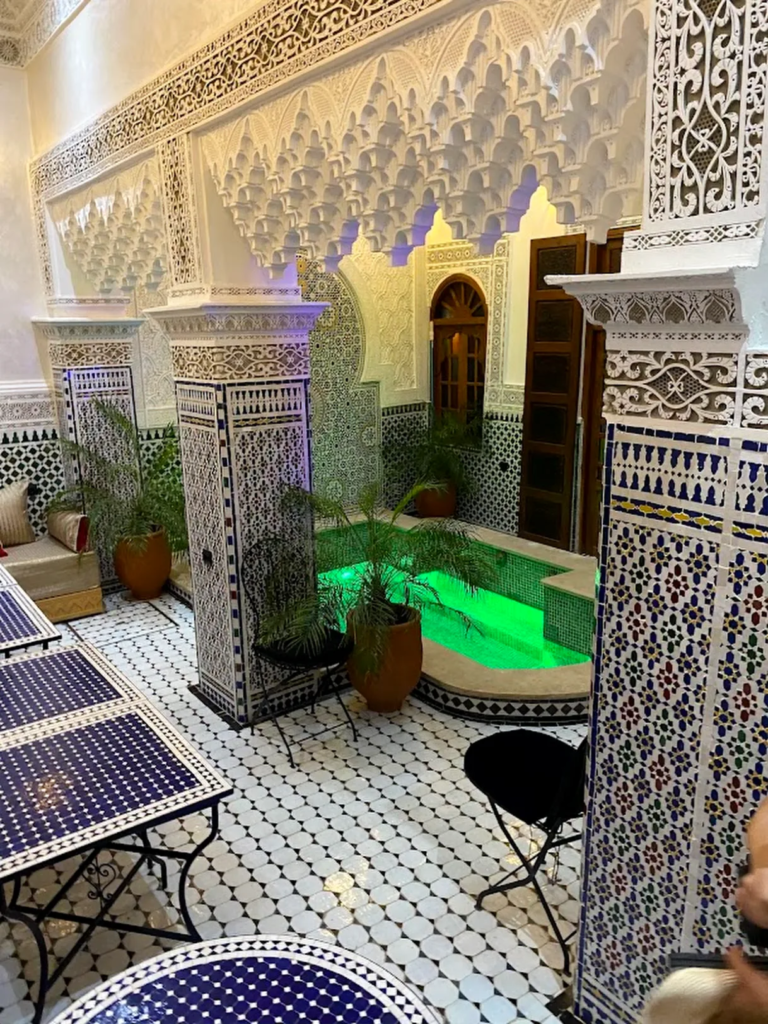
A riad is a traditional townhouse built around a central open courtyard. The word comes from the Arabic for garden, and a true riad has a garden at its heart, classically divided into four planted beds with a fountain in the middle. From the street you see almost nothing: a blank wall, a heavy door, perhaps a brass hand of Fatima as a knocker. Step inside and the house opens upwards towards the sky.
Most riads in the old medinas of Marrakech and Fes were family homes, some of them several centuries old, that have been restored as guesthouses since the 1990s. That restoration boom is part of why the Medina of Marrakesh and the Medina of Fez, both UNESCO World Heritage Sites, still feel lived-in rather than museum-like.
Architecture and the interior courtyard
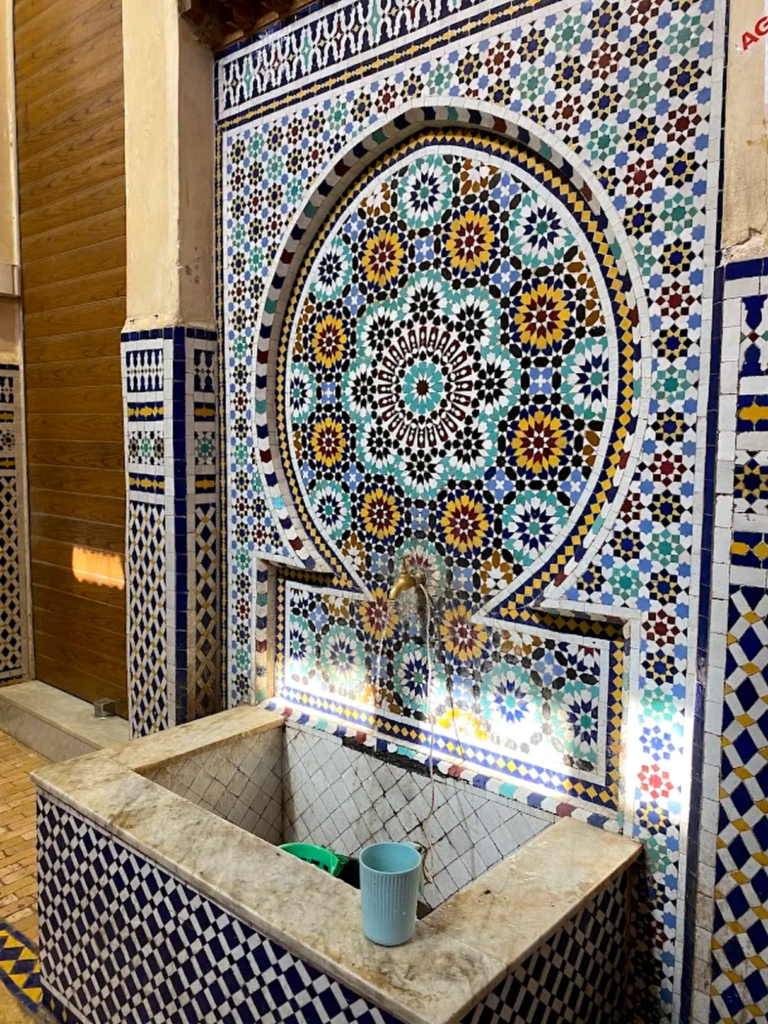
Expect zellige tilework in green, blue and ochre, carved cedar ceilings, stucco arches and tadelakt, the polished lime plaster that makes bathrooms look like smooth stone. Rooms open onto galleries overlooking the courtyard, so windows face inwards rather than onto the street. That gives you privacy and remarkable quiet once the door shuts, but it also means some rooms get little direct light.
The roof terrace is the other half of the riad experience. Breakfast up there in April, with the Atlas still snow-capped on a clear morning and storks on the ramparts, is something guests mention long after they have forgotten the hotel pool they swam in later.
Plunge pools: lovely, but small
Many riads now have a plunge pool in the courtyard or on the roof. Think of it as a place to cool off after a hot afternoon in the souks, not somewhere to swim lengths. Pools are usually 3 to 6 metres long and rarely heated, so between December and February few people go in. If a real pool matters to you, especially in July and August when Marrakech regularly passes 40°C, a hotel wins.
Intimate service
A typical riad has somewhere between 4 and 15 rooms. Staff learn your name on day one, the house manager will book your restaurant and hammam, and breakfast (msemen pancakes, amlou, fresh orange juice, mint tea) is often cooked to order. Many will cook a tagine dinner on request for around 200–350 MAD (roughly €20–35) per person, ideal on a tired first evening.
Riad vs dar: what is the difference?
Strictly speaking, a dar is a house with a central courtyard but no garden; the courtyard is tiled and may have a fountain, but no planted beds. Dars tend to be smaller and a little cheaper. In practice the word riad is used loosely by guesthouses of every size, and plenty of “riads” are architecturally dars. For travellers the difference hardly matters: what you are really choosing is a small guesthouse in a traditional house.
Modern hotels and resorts
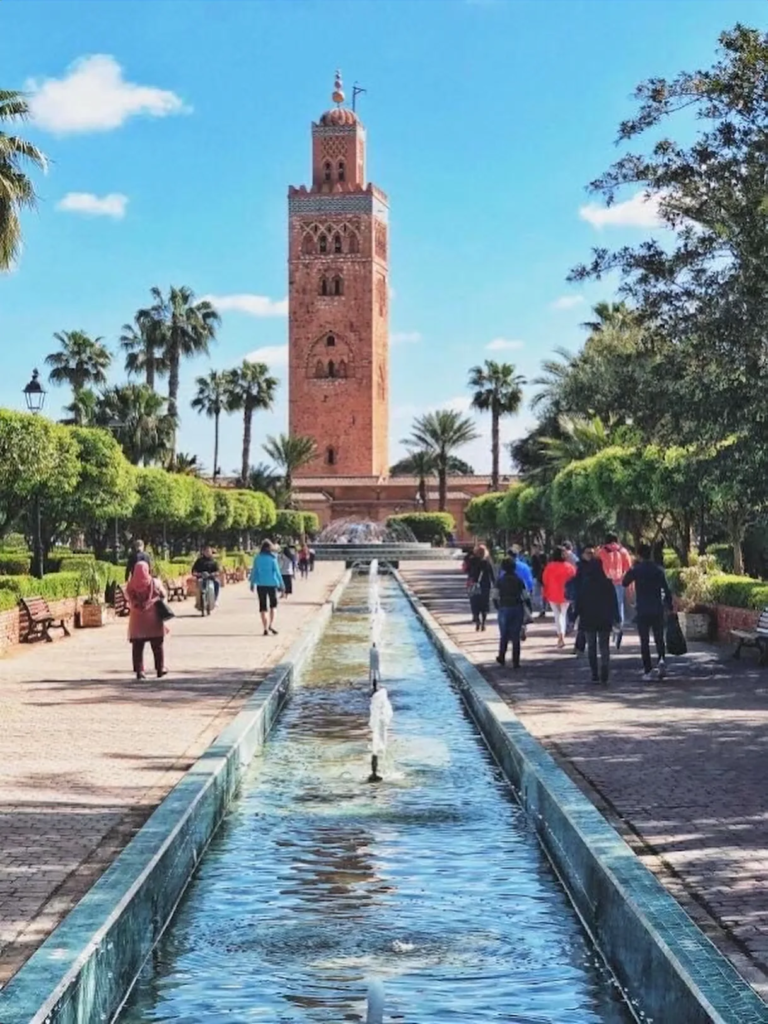
Morocco’s hotels range from simple city-centre two-stars to some of the most celebrated luxury properties in North Africa. The key distinction from riads is not just facilities but location: most sit outside the walled medinas, on streets wide enough for cars.
Where the hotels are
- Hivernage, Marrakech: the leafy district just outside the ramparts, home to many of the city’s large five-star hotels, nightclubs and the Palais des Congrès. It is about a 15–20 minute walk, or a 5-minute taxi, to Jemaa el-Fna.
- Gueliz, Marrakech: the French-built ville nouvelle, with cafés, galleries and mid-range hotels around Avenue Mohammed V. Good for independent travellers who like walking to restaurants in the evening.
- The Palmeraie, Marrakech: a palm grove around 20–30 minutes’ drive north-east of the medina, with resort hotels, golf courses and large gardens. Peaceful, but you depend on taxis or the hotel shuttle.
- Fes: most hotels are in the Ville Nouvelle, 10–15 minutes by petit taxi from Bab Bou Jeloud, the main gate into the old city.
There are exceptions. La Mamounia sits just inside the Marrakech ramparts with a huge walled garden, and the Royal Mansour is effectively a cluster of private riads run as a hotel.
Accessibility and amenities
Hotels offer what riads usually cannot: lifts, step-free access, proper gyms, spas, kids’ clubs, 24-hour reception with a full team, and pools big enough to swim in. Taxis and drivers pull up at the door, and Hivernage is only loud on weekend nights near the clubs.
The trade-off is atmosphere. Even the best Hivernage hotel feels like a good hotel anywhere; you have to make the trip into the medina each day rather than stepping straight into it.
Riad vs hotel: side-by-side comparison
| Feature | Traditional Riad | Modern Hotel |
|---|---|---|
| Location | Inside the medina, walking distance to souks and monuments | Mostly outside the walls (Hivernage, Gueliz, Palmeraie, Ville Nouvelle) |
| Atmosphere | Historic house, courtyard, roof terrace, very local feel | International comfort, more anonymous |
| Size | Usually 4–15 rooms | Often 50–300+ rooms |
| Service | Personal, staff know you by name | Professional, larger team, 24-hour desk |
| Pool | Small plunge pool, often unheated (if any) | Full-size pool, sometimes heated, sun loungers |
| Car access | Usually none to the door; walk 2–10 minutes from a gate | Drop-off at the entrance, on-site parking |
| Stairs and lifts | Steep stairs, lifts rare | Lifts and step-free rooms standard |
| Noise | Quiet inside, but call to prayer and early medina sounds | Generally quiet; traffic or nightlife in some areas |
| Food | Excellent breakfast, home-cooked dinner on request | Several restaurants, bars, room service |
| Families and accessibility | Tricky with toddlers or limited mobility | Easier: family rooms, kids’ clubs, accessible rooms |
| Approx. price per night (double) | 500–1,200 MAD mid-range; 2,500 MAD+ luxury | 700–1,500 MAD mid-range; 3,500–10,000 MAD+ five-star |
Prices are approximate and swing considerably with season; Easter, Christmas and New Year, and October half-term are the tightest periods. For a fuller picture of daily costs, see our guide on how expensive Morocco is.
Practical advice before you book
This is the part most booking sites leave out, and it is where trips go wrong. A beautiful riad can still be the wrong choice if nobody has told you how you will reach it.
Luggage in a pedestrian medina
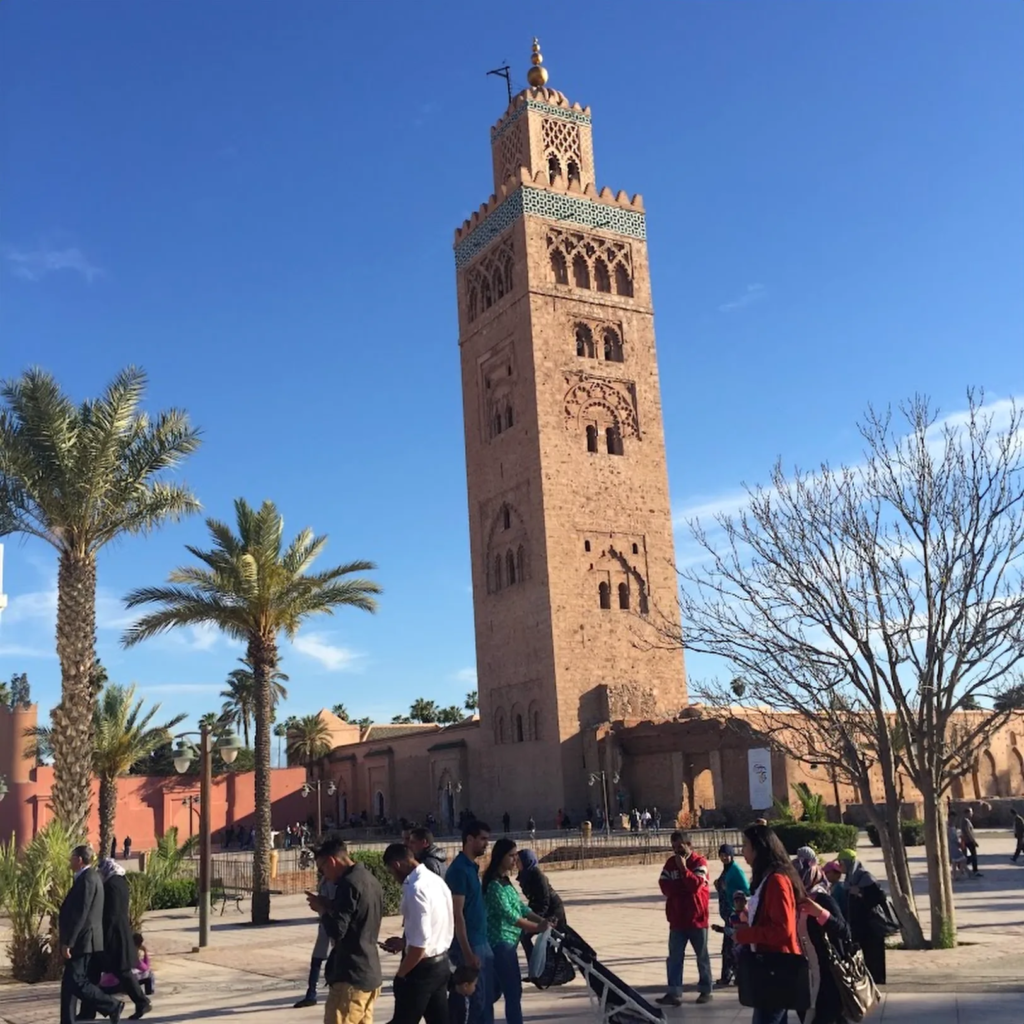
Most of the Marrakech medina and almost all of Fes el-Bali are closed to cars. Your taxi or driver will stop at the nearest gate or square, such as Bab Doukkala, Bab Ksour or the car park near the Koutoubia in Marrakech, or Bab Bou Jeloud or Bab Guissa in Fes. From there you walk, sometimes ten minutes through lanes that all look alike.
The good news: porters with wooden or metal handcarts wait at the gates for exactly this. Better still, ask your riad to send someone to meet you; most do it free or for a small charge, and they will know you are coming. We usually tell our travellers to tip a porter around 20–50 MAD (roughly €2–5) depending on the number of bags and the distance. Agree the amount before setting off if the porter is not from your riad.
Pack accordingly. One medium suitcase with good wheels per person is fine. Last spring one of our couples arrived in Fes with four large cases; it took two carts and three men, and everyone laughed about it afterwards, but they would have been happier with less.
Arrival checklist for a medina riad
- Ask the riad for the exact gate or drop-off point and a pin on a map.
- Arrange for staff to meet you there, especially after dark.
- Keep 100–200 MAD in small notes for tips and taxis.
- Save the riad’s phone number; lanes are poorly signposted.
- Politely decline anyone who offers to “show you the way” unless you have agreed a price.
Parking access
If you are self-driving, a riad deep in the medina means leaving your car in a guarded car park at a gate, usually 30–60 MAD for 24 hours, and walking in. A hotel with on-site parking, or a riad listed as “accessible by car” near a gate, makes life simpler. Travelling with one of our drivers removes the problem, since they handle the drop-off and luggage handover for you.
Noise
Thick walls keep riads quieter than you might expect, but the medina wakes early. The first call to prayer comes before dawn (around 4:30–5 am in summer), there may be a rooster on a neighbouring roof, and delivery donkeys and mopeds start in the lanes from about 7 am. Light sleepers should pack earplugs or ask for a room away from the street door. Hotels in the Palmeraie are the quietest option of all.
Stairs
Riads are built upwards, often over three or four floors including the terrace. Stairs are steep, narrow and sometimes uneven, with no handrail on one side. Staff carry your bags, but you climb to breakfast every morning. Ask for a ground-floor room if this is a concern, and confirm whether the property has a lift; a handful of newer riads do.
Children and limited mobility
Families can absolutely stay in riads, and children often love them. But courtyard pools are usually unfenced and gallery balustrades can be low, so toddlers need constant watching. Some riads do not accept children under a certain age, so check before booking. Many offer family suites or let you book the whole house, which works brilliantly for multi-generational groups.
For wheelchair users or anyone who struggles with steps, a hotel is the safer choice. The medina lanes themselves, cobbled and crowded, are hard going with a wheelchair or pushchair; a lightweight baby carrier works much better than a buggy.
Climate and comfort
Open courtyards are wonderful in spring and autumn but can feel chilly from December to February, when Marrakech nights drop to 5°C or so. Check that rooms have reversible air-conditioning or heating. In high summer the opposite applies: the open courtyard traps heat, and air-conditioning is essential. Our guide to the best time to visit Morocco covers the seasons in detail.
So, which should you choose?
In our experience, first-time visitors who want to feel Morocco should spend at least part of their stay in a riad. Waking up in a 200-year-old house, crossing the courtyard for breakfast and stepping out into the souks five minutes later is a large part of why people fall for Marrakech and Fes.
Choose a hotel if you have very young children, mobility needs or simply want resort facilities.
The combination is often best. A typical plan we put together: three nights in a medina riad in Marrakech, a two-night Morocco desert tour to the dunes of Merzouga, then two nights in a Palmeraie resort to rest before flying home. If you are still building your route, our 7-day Morocco itinerary shows how the stops fit together.
Our Morocco accommodation service can book either, and on our luxury Morocco tours we mix restored palace riads with top-end hotels depending on what each traveller prefers. For general tourism information, the official Visit Morocco portal is a useful starting point.
Frequently asked questions
Is it better to stay in a riad or a hotel in Marrakech?
For atmosphere and walking access to Jemaa el-Fna and the souks, a riad in the medina is better. For lifts, large pools, parking and family facilities, a hotel in Hivernage or the Palmeraie is better. Many travellers do both.
Are riads safe?
Yes. Riads have a single locked street door and staff on site, often around the clock.
Can taxis drive to a riad?
Usually not all the way. Taxis stop at the nearest gate or square and you walk the last few minutes. Porters with carts, or riad staff, carry your luggage for a small tip of around 20–50 MAD.
Do riads have swimming pools?
Many have a small plunge pool in the courtyard or on the roof, often unheated. If swimming matters, choose a hotel or a riad with a larger pool and check the dimensions before booking.
Are riads good for families with young children?
They can be, especially if you book family suites or the whole house, but steep stairs, unfenced pools and low balustrades mean toddlers need close supervision. Some riads have minimum age policies.
What is the difference between a riad and a dar?
A riad has a garden in its central courtyard; a dar has a courtyard without a garden. Today both names are used loosely for traditional-house guesthouses.
Not sure which suits your trip? Tell us your dates, who is travelling and how you like to stay, and our Marrakech team will suggest riads and hotels that fit, along with the drivers, guides and private Morocco tours to go with them. Get in touch with us and we will start planning.