
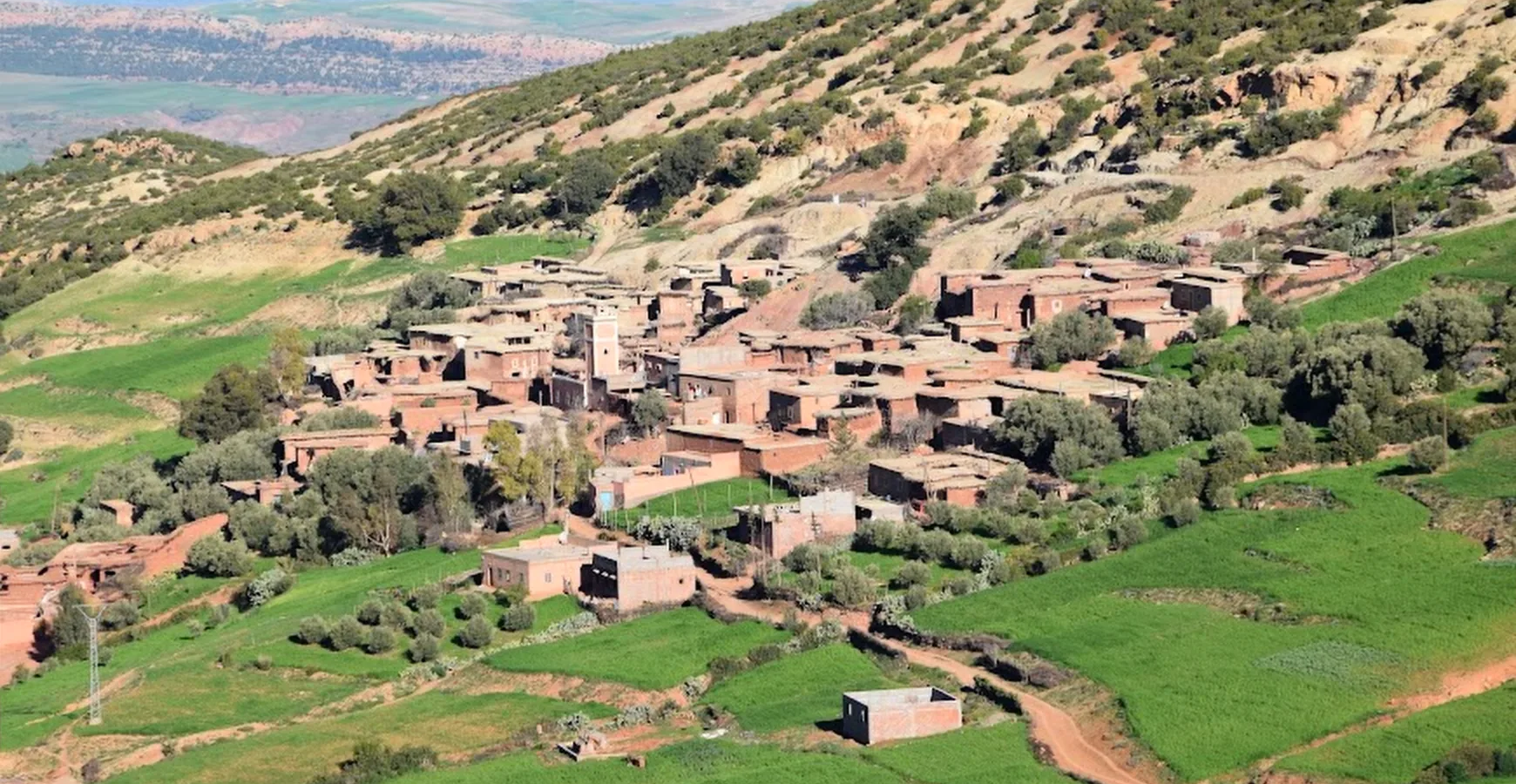
Student trips to Morocco give young people something a textbook cannot: the noise of a souk at closing time, a conversation in broken French with a carpet weaver, a sky so full of stars over the dunes that the whole group goes quiet. A short flight from most of Europe, the country packs Islamic architecture, Amazigh (Berber) village life, colonial history, geography fieldwork and a living Arabic dialect into a single week.
We are a local team based in Marrakech with over a decade of experience running tours across the country, and we plan school and university groups with the same care we give to private travellers – only with more checklists. Teachers tell us what the trip needs to achieve; we build the logistics, vehicles, accommodation and local contacts around it.
Why Morocco works for school and university groups
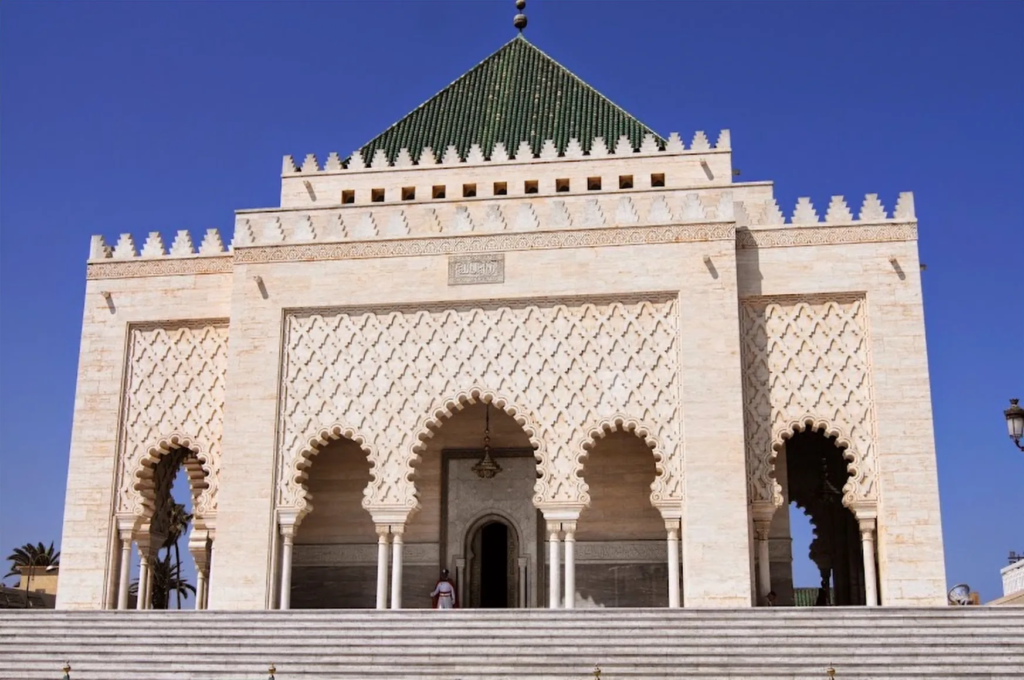
For language departments, Morocco is a French-speaking country where students can practise in real situations, from ordering at a juice stall to asking directions in the medina. History and religious studies groups can see a working madrasa, Almoravid and Saadian monuments and a former Jewish quarter in the same afternoon. Geographers find mountain terraces, oasis irrigation and sand seas within a few hours’ drive of each other.
Just as valuable is the softer learning: haggling politely, eating from a shared tagine, understanding how hospitality works in a culture different from their own. Most students come home with a different idea of what North Africa is like.
Educational programmes we can build
Every school has its own goals, so treat these as starting points rather than fixed packages.
- Medina studies: guided walks through the old cities of Marrakech and Fes, both UNESCO World Heritage Sites, looking at urban planning, trade guilds, fountains and the role of the mosque and hammam in daily life. The Medina of Fez is an outstanding case study for history classes.
- Arts and crafts: visits to tanneries, potters, weavers and woodworkers, ideally with a short hands-on session.
- Geography and environment: the High Atlas crossing, water management in the palm groves and desertification on the edge of the Sahara.
- Religion and society: an introduction to Islam in Morocco with a local guide, and the country’s long Jewish heritage.
Our cultural tours of Morocco and our overview of the imperial cities of Morocco give more ideas for subject-specific content.
Cultural exchange, language tasters and community visits
A short Arabic or Darija taster session is one of the most popular additions. In an hour or two with a local teacher, students learn greetings, numbers for the market and a few phrases that make shopkeepers smile. Groups studying Arabic can arrange longer sessions over several days.
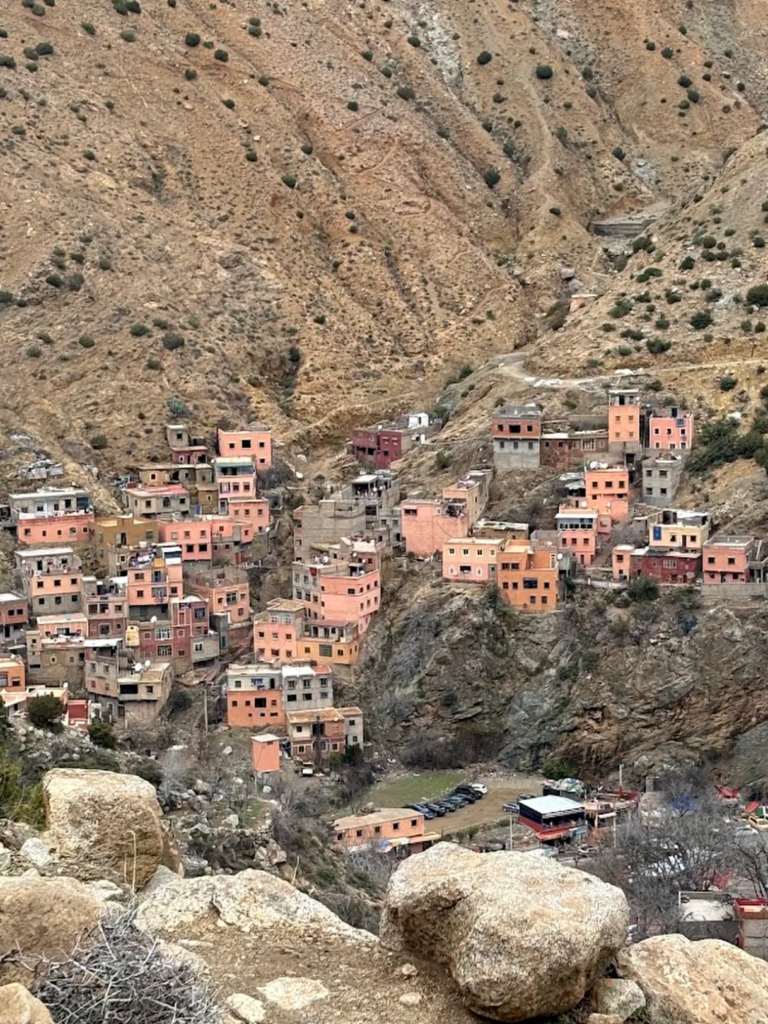
We can also arrange, with trusted local partners and on request, meetings with Moroccan students, an evening with a family in an Atlas village, or a visit to a women’s cooperative making argan oil or textiles. Community and volunteer visits are possible through partner associations, but we never promise a particular project in advance: the details depend on the season, the partner’s needs and the size of your group, and we confirm them only once they are agreed locally.
Group tours for students
For smaller university groups or students travelling independently, our shared departures are an easy and affordable way to reach the desert or travel between cities. For a full school group we usually run the same routes privately, with your own vehicles and a schedule fitted to your timetable.
 Small group · 3 days · from Marrakech
Shared 3-Day Desert Tour from Marrakech to Merzouga
- Small group · 3 days · from Marrakech
3-Day Shared Group Tour from Marrakech to Fes
- Private tour · 3 days · from Marrakech
3-Day Desert Tour from Marrakech to Merzouga
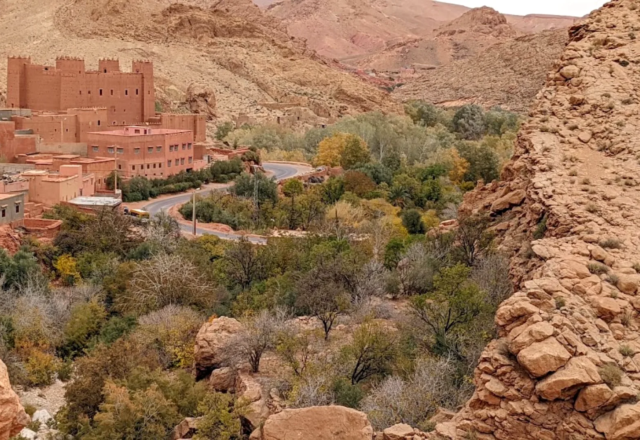
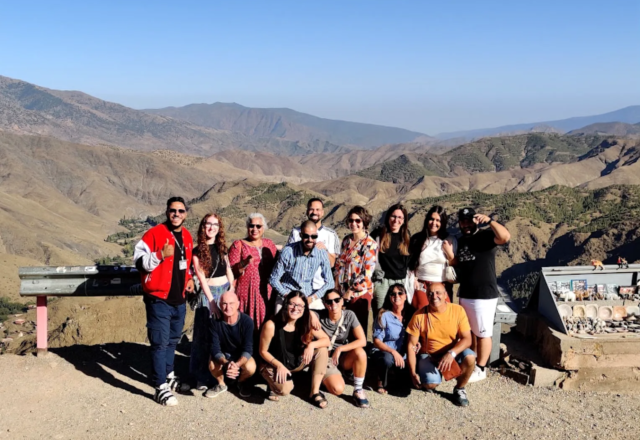
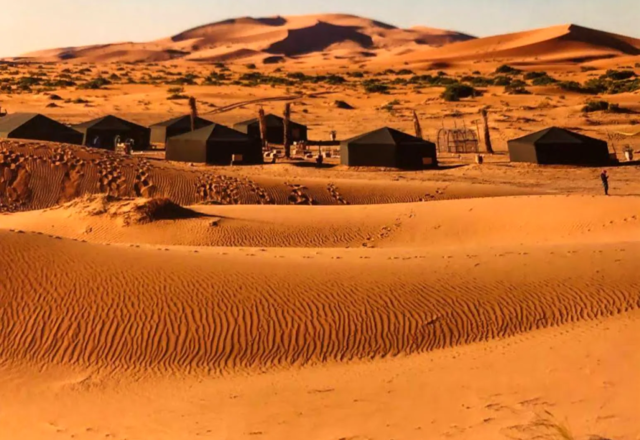
The shared Marrakech desert tour is the most popular choice for gap-year and exchange students, while bigger groups often prefer a private version so they can travel together. See all our group tours for other options.
Accommodation, transport and budgets
For school groups we use simple, clean and well-located places: hostels and budget riads in the medinas, family-run hotels in the valleys and desert camps with shared or private tents. Riads are charming but often have small rooms around a courtyard, which suits a group well because everyone is under one roof with a single entrance. Bigger groups may be split between neighbouring riads or housed in a mid-range hotel instead.
Transport is by air-conditioned minibus or coach, depending on numbers, with experienced drivers and rest stops planned at sensible intervals. Food is generally inexpensive, and we can cater for vegetarian, halal (standard in Morocco) and most allergy requirements if we know in advance. Our page on how expensive Morocco is helps when setting pocket-money guidelines.
Group pricing depends on numbers, dates, the level of accommodation and how many free places for staff you need, so we do not publish a fixed rate. Send us your outline and we will prepare a free, itemised quote.
Safety, supervision and ratios
Morocco is a welcoming country and organised student groups visit every year without trouble. Sensible precautions still matter, and we plan them with you before departure.
How we look after school groups
- Supervision ratios follow your school or local authority policy; as a rule of thumb many schools bring at least one staff member for every ten students, more for younger pupils.
- A local guide stays with the group in the medinas, where lanes are narrow and easy to get lost in.
- Drivers do not work excessive hours and long stages are broken up.
- Teachers receive a 24-hour local contact number and the details of every hotel, driver and guide.
- We share risk-assessment information on request: routes, accommodation and emergency procedures.
Before you travel, it is worth reading our honest look at whether Morocco is safe to visit and sharing our guide to what to wear in Morocco with students and parents. Modest clothing – shoulders and knees covered – makes everyone more comfortable, especially in rural areas.
Frequently asked questions
What is the minimum age for a school trip to Morocco?
There is no fixed minimum, but most of the groups we host are secondary school, sixth form or university students. Younger groups are possible with higher staff ratios and shorter travel days.
How long should a student trip be?
Five to eight days is ideal. That allows two cities, a night in the desert or the Atlas and time for a workshop or exchange without rushing.
Can students do a Darija or Arabic lesson?
Yes. We arrange taster sessions with local teachers, from a single introductory hour to several classes for groups studying the language.
Do you organise volunteer work?
We can arrange community visits and, where appropriate, short volunteer activities through trusted local partners on request. These are agreed case by case, so we confirm details only once a partner has accepted.
How do we get a price for our group?
Send us your dates, number of students and staff, preferred cities and budget level. We reply with a free quote; once agreed, a 10% deposit secures the booking.
Can you help with trip paperwork for our school?
We can provide itineraries, accommodation details and supplier information for your risk assessment and parental letters. Insurance and visas remain the responsibility of the school and travellers.
Planning a trip for next term or next year? Share your learning goals and rough numbers with our team and we will put together a programme and a free quote. Get in touch by email at nomalortravel@gmail.com or on WhatsApp at +212 673 55 54 08.