The Ultimate Guide to Surf and Sahara in Morocco
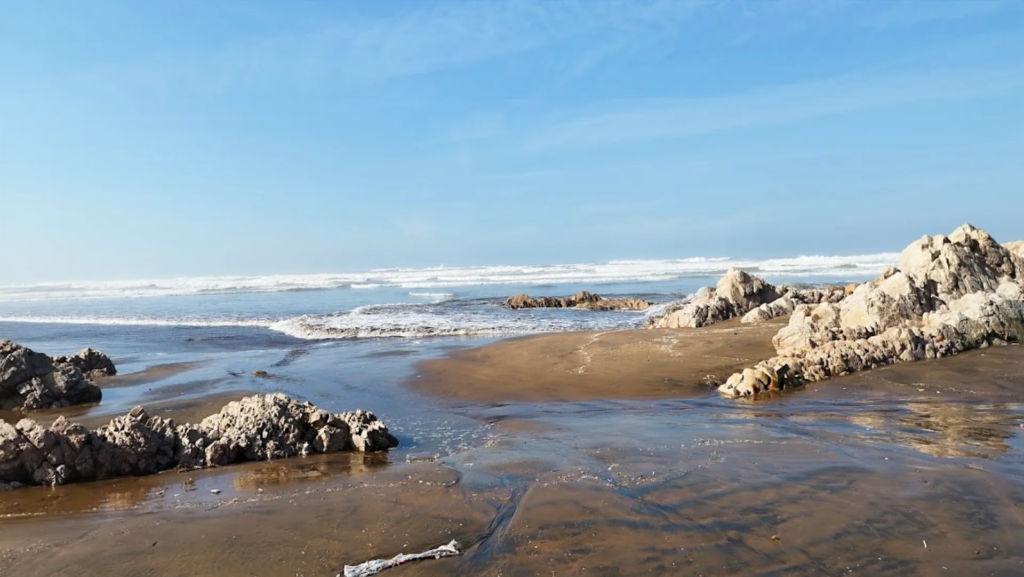
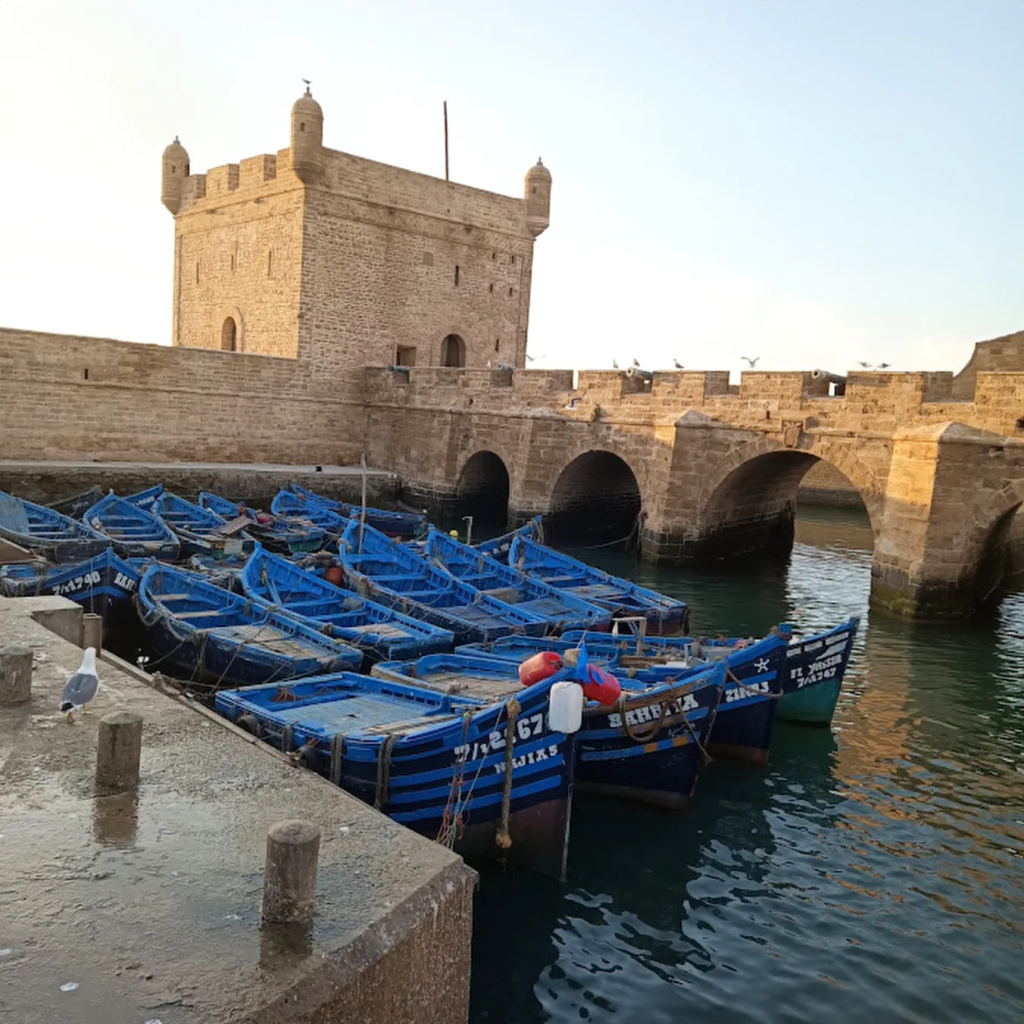
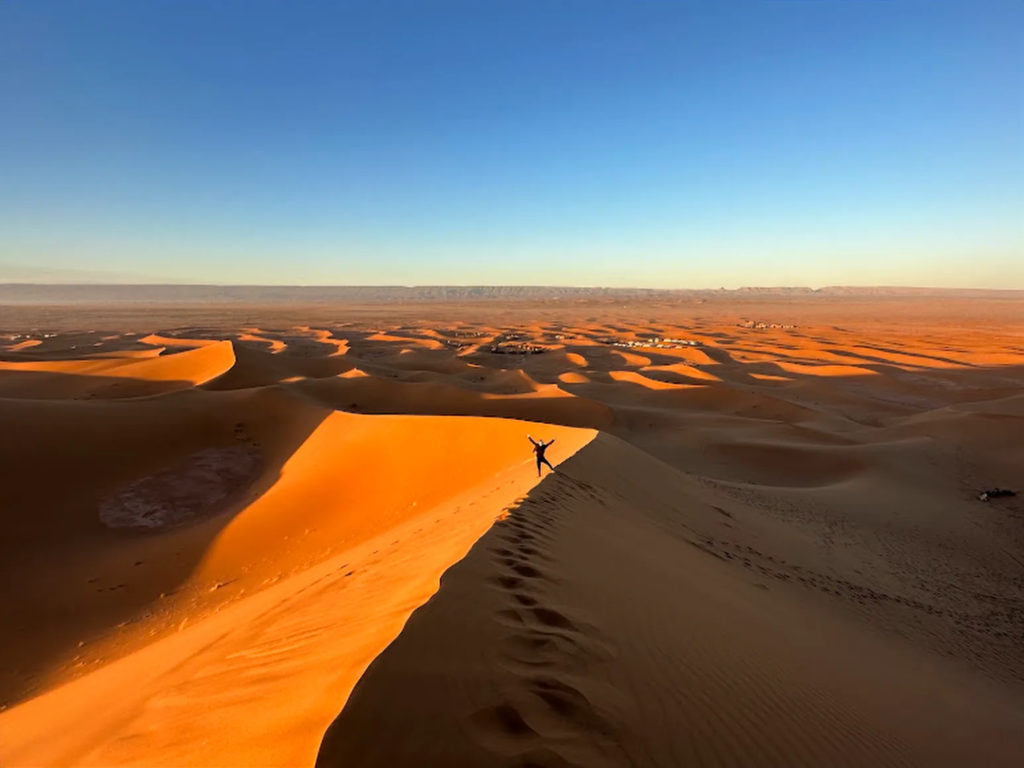
At seven in the morning in Taghazout the swell lines wrap around Anchor Point and the fishermen are already hauling boats up the sand. Three days later the same travellers are sitting on a dune in Erg Chebbi, sand in their ears, watching the sky go orange over Algeria. That contrast is the whole point of a Morocco Surf & Sahara excursion: one country, two completely different landscapes, and a road through the High Atlas linking them. We plan this trip for travellers every winter, and it is one of the few itineraries where people come home saying they did not want either half to end.
In short: spend 3–5 days surfing around Taghazout, Tamraght and Imsouane between October and April, and 3–4 days on a desert loop from Marrakech to Merzouga and back via Ouarzazate. A 7–10 day surf and Sahara trip covers both comfortably, with the long drives broken up by the Todra Gorge and Aït Benhaddou.
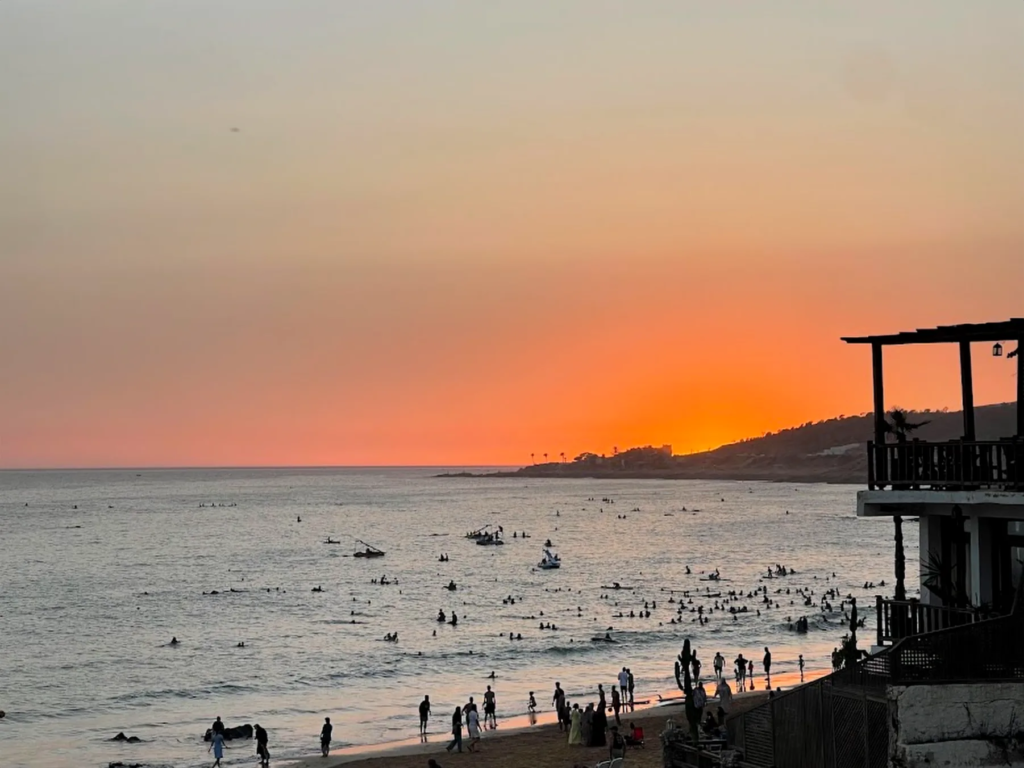
Why combine Atlantic surf and the Sahara?
Geography does most of the work. Morocco’s best surf coast sits around Agadir, and the big dunes of Merzouga are roughly a day’s drive east. Few places let you swap a wetsuit for a camel saddle without catching a flight.
The seasons also line up. Winter is when the Atlantic delivers consistent groundswell, and it is also when the desert is pleasant during the day rather than punishing. In July the dunes hit 45°C and the surf coast is mostly small and windy, so the summer version of this trip is a compromise.
And there is a rhythm to it that works. Surfing is tiring; a few days of long drives, kasbahs and a quiet desert camp give sore shoulders time to recover before you paddle out again.
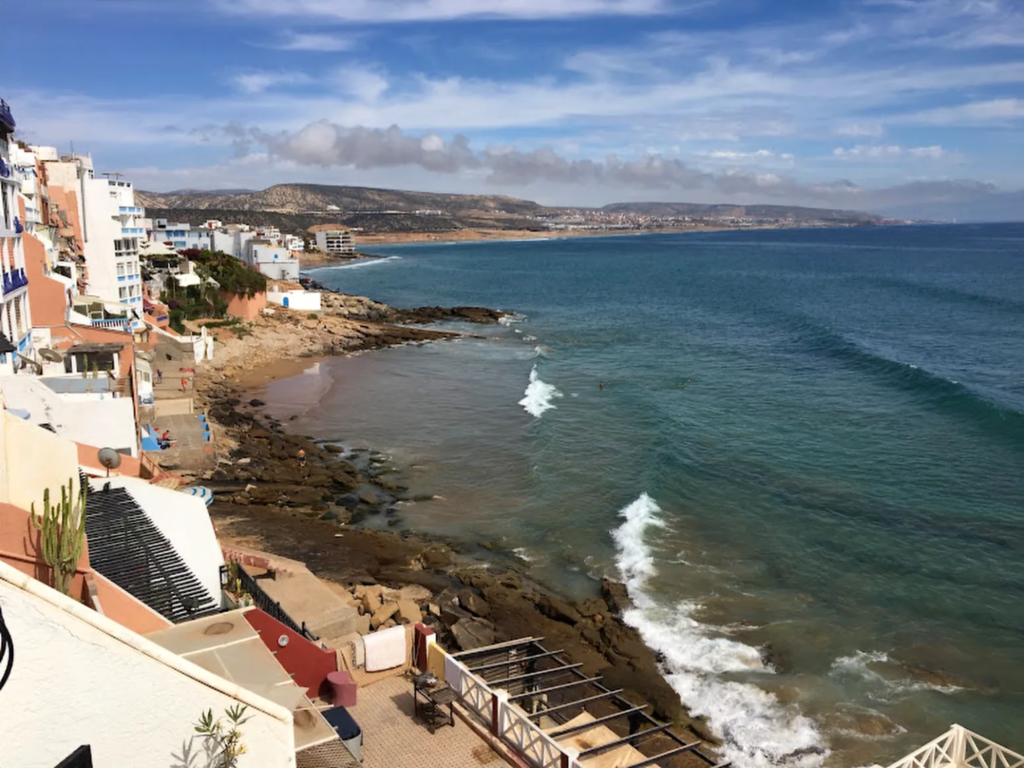
The best surf spots in Morocco, by level and season
Most of the action is on a 60 km stretch north of Agadir. Water temperature runs from about 17°C in February to 21–22°C in August and September, so it is cool rather than cold.
Taghazout
The former fishing village is the hub, with surf shops, cafés selling msemen and mint tea for 10–15 MAD, and the famous right-hand points to the north. The beach in town is fine for a splash, but the quality waves are on the reefs and points.
Anchor Point
A long, peeling right-hand point break just north of the village, and on a good north-west swell it can run for several hundred metres. It is for experienced surfers only: rocky entry, a strong current and a crowded line-up from November to February. Watch a full set from the cliff before paddling out.
Killer Point
Further north, a heavier right over reef that holds big swells. The name supposedly comes from the orcas once seen offshore, not the wave, but it still deserves respect. Advanced surfers, mid-winter, and ideally with someone who knows the channel.
Tamraght
Tamraght sits between Agadir and Taghazout and is where many surf camps are based. Devil’s Rock is a forgiving beach break, and Banana Point at the river mouth offers mellow rights for improving surfers. Prices for rooms tend to be slightly lower than in Taghazout.
Imsouane
About 1 hour 15 minutes north of Taghazout, Imsouane’s Bay produces one of the longest, gentlest right-handers in Africa. On a decent day beginners and longboarders can ride for well over a minute. Cathedral Point, on the other side of the headland, is a punchier beach and reef break for intermediates. The village is small and quiet, with grilled sardines on the harbour for around 40–60 MAD a plate.
Essaouira and Sidi Kaouki
Essaouira’s town beach is better known for wind than waves, and from April to September it belongs to kitesurfers. Sidi Kaouki, about 25 km south, is a consistent, exposed beach break that suits intermediates and has a wonderfully end-of-the-road feel. Combine it with a night in Essaouira’s walled UNESCO-listed medina if you are coming from Marrakech.
| Spot | Level | Best months | Wave type |
|---|---|---|---|
| Anchor Point (Taghazout) | Advanced | Nov–Mar | Long right-hand point break over rock |
| Killer Point (north of Taghazout) | Advanced | Dec–Feb | Powerful right over reef, holds big swell |
| Devil’s Rock (Tamraght) | Beginner–intermediate | Oct–Apr | Beach break, peaks both ways |
| Banana Point (Tamraght) | Beginner–intermediate | Oct–Mar | Gentle right at a river mouth |
| The Bay (Imsouane) | Beginner–longboard | Oct–Apr | Very long, slow right-hand point |
| Cathedral (Imsouane) | Intermediate | Oct–Apr | Beach/reef break, faster and steeper |
| Sidi Kaouki (near Essaouira) | Intermediate | Oct–Mar | Exposed beach break, often windy |
The desert side: Merzouga (Erg Chebbi) or Zagora?
This decision shapes the whole route, so it is worth being honest about the differences.
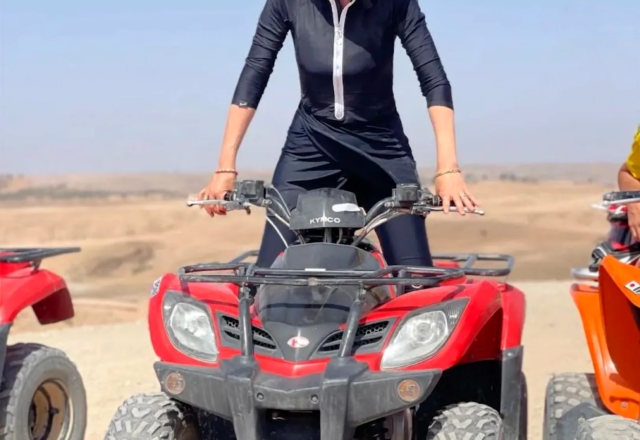
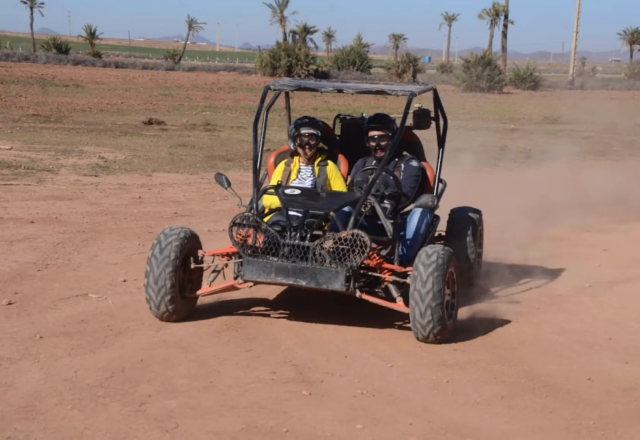
Merzouga and Erg Chebbi are the dunes most people picture: orange sand rising to around 150 m, camel caravans, and camps tucked between the ridges. It is roughly 560 km and 9–10 hours of driving from Marrakech, which is why we always split it over two days. Once there you can add a longer camel trek or quad biking in the dunes, visit the Gnaoua musicians at Khamlia and sandboard at sunset.
Zagora is about 7 hours from Marrakech via the Draa Valley and its palm groves. The dunes at Tinfou and the camps near Zagora are much smaller, more stony desert than sea of sand. It works for travellers who are short on time, but people expecting the Sahara of postcards are sometimes disappointed. For an even shorter taste, the stony Agafay plateau is 45 minutes from Marrakech; we compare all three in our guide to Merzouga vs Agafay.
Our view: if you have seven days or more, go to Merzouga. The extra driving is the price of real dunes, and it is worth paying.
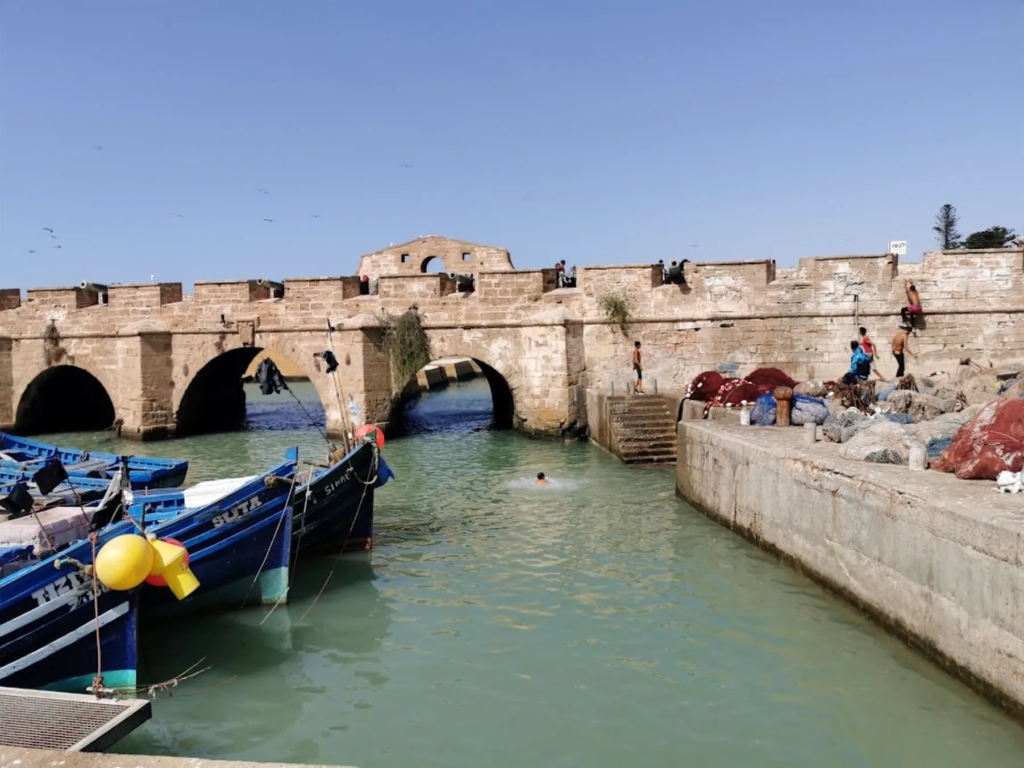
A 7–10 day Morocco surf and desert tour
This is the loop we build most often. It starts in Marrakech, does the desert first while you are fresh, and finishes on the coast so the trip ends on a slow note. Driving times are realistic, including photo stops but not long lunches.
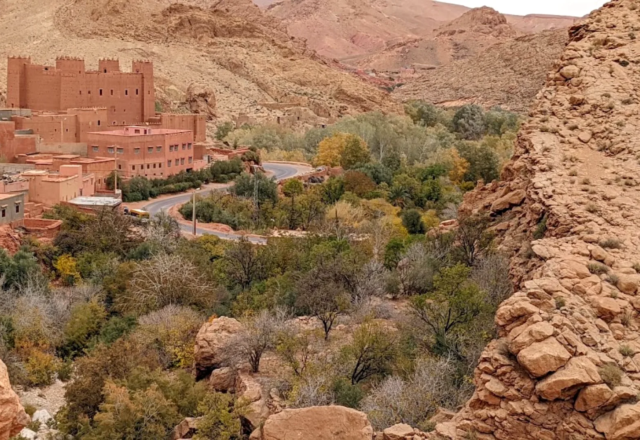
- Day 1 – Marrakech to Dades Valley (about 320 km, 6–7 h). Over the Tizi n’Tichka pass at 2,260 m, then a stop at the fortified village of Aït Benhaddou before continuing through Ouarzazate and the Valley of Roses.
- Day 2 – Dades to Merzouga (about 280 km, 5–6 h). Morning walk in the Todra Gorge, lunch in Tinghir, then the flat run to Erg Chebbi. Camel ride into the dunes for sunset and a night in camp.
- Day 3 – Merzouga. A full day in the desert: sunrise on the dunes, Khamlia village, a 4×4 loop or a lazy afternoon in the camp shade. This extra night is the one people never regret.
- Day 4 – Merzouga to Ouarzazate (about 370 km, 6 h). Back west along the Route of a Thousand Kasbahs. Overnight in Ouarzazate or Skoura’s palm grove.
- Day 5 – Ouarzazate to Taghazout (about 380 km, 6 h). South-west via Taliouine, the saffron town, and the argan country around Taroudant, down to the coast.
- Days 6–8 – Taghazout and Tamraght. Lessons or guided sessions twice a day depending on tides, with a yoga class or a hammam in between.
- Day 9 – Imsouane (1 h 15 min each way). A day trip, or move up for a night so you can surf the Bay at dawn.
- Day 10 – Return. Agadir airport is about 45 minutes from Taghazout; Marrakech is around 3 h by motorway.
For seven days, drop the extra Merzouga night and one coastal day. If you are flying into Agadir instead, reverse the loop: our 4-day Agadir desert tour reaches Merzouga from the coast and brings you back in time to surf. Short on days? The 3-day Marrakech to Merzouga desert tour can be paired with a few days in Taghazout by bus or transfer.
One tip we give everyone: do not try to drive Merzouga to Taghazout in one go. It is over 700 km, and the last stretch through the Anti-Atlas after dark is not fun. Break it in Ouarzazate or Taroudant.
Surf & Sahara at a glance
- Ideal length: 7–10 days
- Best months: October–November and March–April for both halves; December–February for the biggest waves but cold desert nights
- Surf base: Taghazout or Tamraght, with a day in Imsouane
- Desert: Merzouga (Erg Chebbi) for real dunes; Zagora if very short on time
- Driving: Marrakech–Merzouga about 9–10 h, best split over two days
- Wetsuit: 4/3 mm in winter, 3/2 mm in spring and autumn
- Budget: roughly 900–1,800 MAD (€85–170) per person per day, mid-range, all in
Best months for a surf and Sahara trip
Surf season on the Moroccan Atlantic runs from roughly October to April, when North Atlantic storms send long-period swell. December to February has the most power and the biggest crowds at the points. October, November, March and April are gentler and better for beginners.
The desert is at its best in spring (March to May) and autumn (late September to November). In December and January days are a comfortable 18–20°C in Merzouga, but nights can drop close to freezing, and the Tichka pass occasionally closes for a few hours after snow. Summer is very hot inland and the coast is small and windy, though it is warm enough to learn in a shorty.
The sweet spot for this combination is October–November or March–April. Our month-by-month guide on the best time to visit Morocco goes into more detail, including Ramadan dates.
What to pack
The packing list is awkward because you need beach kit and warm layers in the same bag. Wetsuits are easy to rent locally, so do not fly one in unless you are particular about fit.
- December to March: 4/3 mm full suit; booties are optional but help on the rocky entries at Anchor Point.
- April to June and October to November: 3/2 mm full suit.
- July to September: 3/2 mm or a spring suit; some locals surf in boardshorts in late August.
- Reef-safe sunscreen, a hat and sunglasses. The sun is strong all year.
- A warm fleece or down jacket and a hat for desert nights, especially November to February.
- A scarf or cheche for wind and sand in the dunes; you can buy one in Merzouga for 50–100 MAD.
- Modest clothes for towns and villages: shoulders and knees covered goes a long way.
- A small daypack for the one night in camp, so the big bag can stay in the vehicle.
How much does a Morocco Surf & Sahara excursion cost?
All prices are approximate for 2026 and vary with season and comfort level. Roughly 10–11 MAD equals €1.
- Group surf lesson (2 hours, board and wetsuit included): 250–400 MAD (€25–40).
- Board and wetsuit rental: 100–200 MAD (€10–20) a day, cheaper by the week.
- Surf camp week with room, breakfast, dinner and daily lessons: about 4,500–9,000 MAD (€420–850) per person.
- Shared 3-day desert tour from Marrakech to Merzouga: about 1,000–1,800 MAD (€95–170), including transport, two nights and most meals.
- Private desert tour with your own driver: from about 2,500–4,500 MAD (€230–420) per person for three days, depending on group size and camp standard.
- Meals: a tagine in a local café 50–90 MAD; a fish dinner in Taghazout 120–200 MAD.
A mid-range ten-day trip usually lands between €900 and €1,700 per person excluding flights. For a full breakdown of daily spending, see how expensive Morocco is.
Getting around: self-drive, bus or driver?
CTM and Supratours buses connect Marrakech with Agadir and Taghazout cheaply, but getting from the coast to Merzouga by public transport takes most of two days. Self-driving is possible, though the mountain roads, livestock and night driving make it tiring.
Most of our surf and desert travellers book a car with driver for the desert leg and then stay put on the coast, where you can walk or take a taxi between breaks. It also solves the board problem: a driver with a roof rack is far easier than strapping a longboard to a bus. Check the latest UK travel advice for Morocco before you go.
Frequently asked questions
Can complete beginners do a surf and Sahara trip?
Yes. Tamraght’s beach breaks and Imsouane’s Bay are ideal for first-timers, and the desert half needs no experience at all. Book lessons rather than renting a board on day one, and avoid the advanced points.
Is it better to start in Marrakech or Agadir?
Marrakech has more flight options and puts you closer to the Atlas. Agadir is only 45 minutes from Taghazout, so if surfing is the priority, flying into Agadir and doing the desert as a loop from the coast works well.
How many days do I need in the desert?
Three days from Marrakech is the minimum to reach Merzouga with one night in a camp. Four days lets you spend a second night and actually enjoy the dunes rather than just driving to them.
Is the water cold in Morocco in winter?
It is cool rather than cold, around 17–18°C from December to March. A 4/3 mm wetsuit is comfortable; most people do not need gloves or a hood.
Can I surf in Morocco in summer?
You can, but waves are smaller and onshore winds are common in the afternoon. It suits beginners in warm water, and the desert is very hot, so plan early mornings and evenings in the dunes.
If you would like us to put your own surf and desert route together, with a driver for the Atlas, a camp in Erg Chebbi and a few days in Taghazout, have a look at our tailor-made trips or simply get in touch with our team in Marrakech. Tell us your level and your dates, and we will match the swell to the sand.