The Ultimate 7-Day Morocco Itinerary for First-Time Visitors
Seven days sounds like a lot until you look at a map of Morocco. The country is bigger than California, and the places first-timers want to see most (the souks of Marrakech, the Sahara dunes, the old medina of Fes) sit hundreds of kilometres apart, with the High Atlas in between. This 7 day Morocco itinerary is the route we have refined over years of planning trips from our office in Marrakech: it is ambitious but realistic, and it never asks you to sleep in the same bus seat twice.
We have watched travellers try to cram Chefchaouen, Essaouira, Rabat and the desert into one week. They go home with a camera full of car windows. The plan below makes choices instead.
In short
Fly into Marrakech, spend two days in the medina, then cross the High Atlas via the Tizi n’Tichka pass and Aït Benhaddou to sleep in a camp in the Merzouga dunes. Drive north to Fes for two nights, then take the train to Casablanca (about 4 hours) for your flight home. Budget roughly 500 MAD a day as a backpacker, 1,200–2,000 MAD mid-range, and 4,000 MAD or more for luxury.
The route at a glance
- Day 1: Arrive in Marrakech, evening in Jemaa el-Fna
- Day 2: Marrakech medina, palaces and gardens
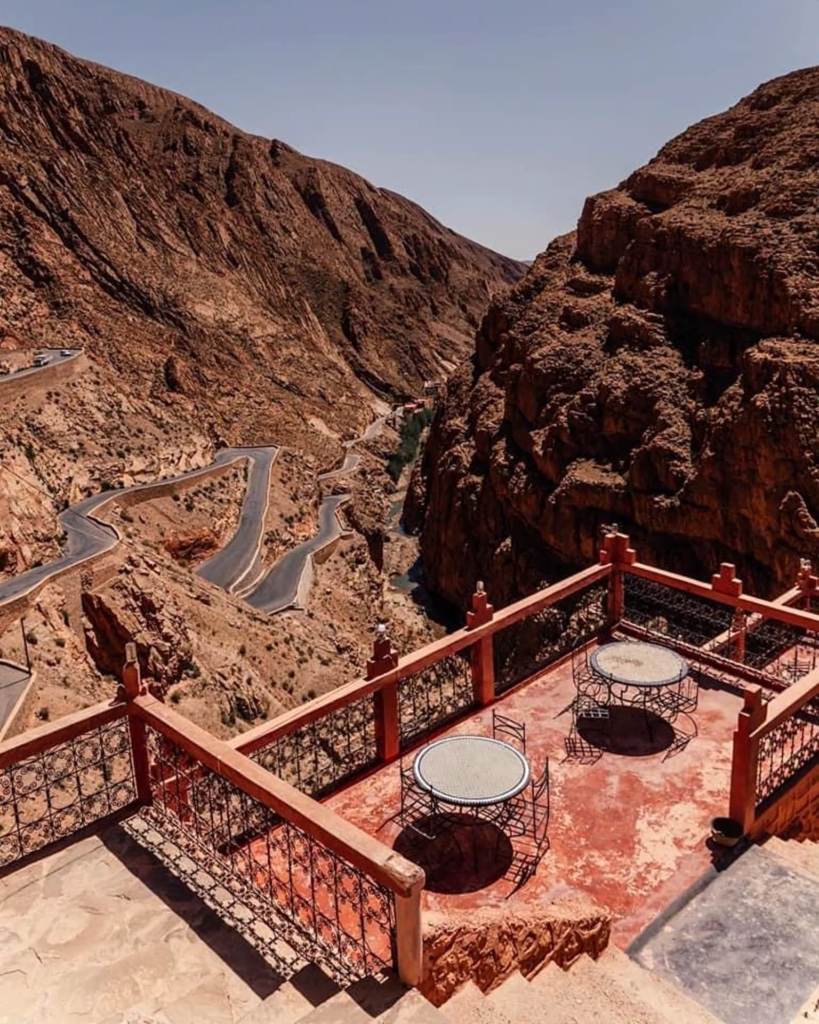
- Day 3: High Atlas, Tizi n’Tichka, Aït Benhaddou, Dades Gorge
- Day 4: Todra Gorge to Merzouga, camel ride and night in the Sahara
- Day 5: Desert sunrise, drive north through the Ziz Valley and Middle Atlas to Fes
- Day 6: Full day in the Fes medina
- Day 7: Train Fes to Casablanca, Hassan II Mosque, departure
Days 3 to 5 are exactly what our 3-day Marrakech to Fes desert tour covers, so you can book that middle section as a package and handle the cities yourself. If you would rather hand over the whole week, including airport pick-ups and the Casablanca end, our 7-day tour from Casablanca runs a very similar loop in the opposite direction.
Days 1–2: Marrakech
Day 1: Arrival and the square at dusk
Marrakech Menara airport is only 15–20 minutes from the medina. A petit taxi should cost around 100–150 MAD (about €10–14 / US$10–15) by day; agree the price before you get in, or arrange a transfer through your riad. Drivers cannot enter most medina lanes, so expect a porter with a handcart to meet you at the nearest gate. A tip of 20–30 MAD is fair.
Drop your bags and walk to Jemaa el-Fna around sunset. This is when the food stalls fire up their grills and the square fills with storytellers, Gnaoua musicians and orange-juice carts (around 5–10 MAD a glass). Climb to a rooftop café on the north side for the view, then eat at the stalls below. Stall 14 and its neighbours sell good grilled merguez and harira; look for the busiest benches with local families on them.
One honest warning: snake charmers and henna women expect money if you photograph them or let them touch your hand. Decide in advance, or keep walking.
Day 2: Medina, palaces and a garden break
Start early, before 9 am, when the lanes are cool and the shopkeepers are still sweeping their doorsteps. A sensible loop:
- Ben Youssef Madrasa – the carved cedar and zellige courtyard is the finest in the city (entry approx. 50 MAD).
- The souks – walk south through Souk Semmarine, then lose yourself among the dyers, metalworkers and leather sellers around Souk Haddadine.
- Bahia Palace – go after lunch when the tour groups thin out (entry approx. 100 MAD).
- Jardin Majorelle – book a timed ticket online; it is a 20-minute walk or short taxi ride outside the walls. Expect around 160–170 MAD for the garden alone.
End the day with a hammam. A local public hammam costs as little as 20–50 MAD with a scrub extra; a spa hammam in a riad or hotel runs 300–700 MAD. We usually tell our travellers to do this on Day 2 rather than after the desert, when you will be grateful to have the dust scrubbed off but too tired to enjoy it.
The Medina of Marrakech is a UNESCO World Heritage Site, and you will see why once you stop looking at your phone map. Our Marrakech tours include guided medina walks, cooking classes and Agafay sunset trips if you have energy left over.
Days 3–4: The High Atlas and the Merzouga Sahara
This is the part of the week people remember longest, and also the part with the most time on the road. Marrakech to Merzouga is about 560 km, 9–10 hours of driving without stops, so splitting it over two days is not optional. Doing it in one day is technically possible and miserable in practice.
Day 3: Tizi n’Tichka, Aït Benhaddou and the Dades Gorge
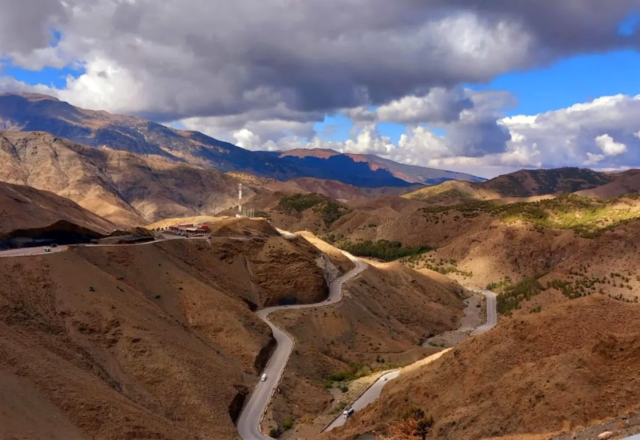
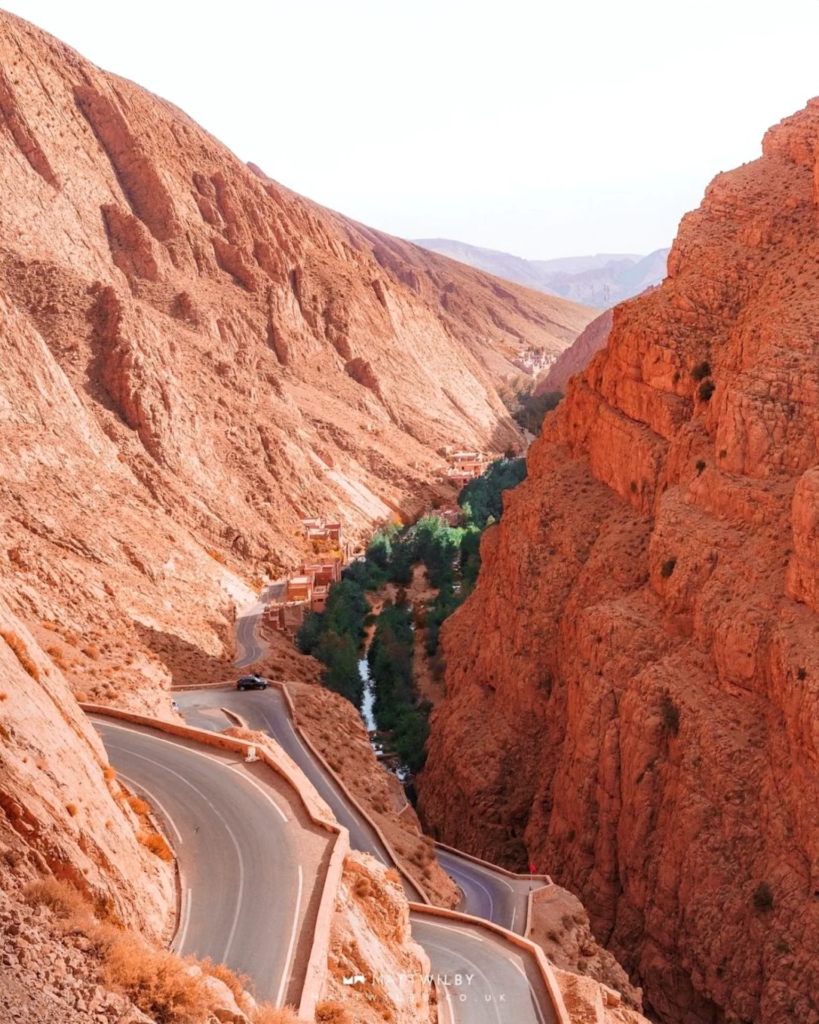
Leave Marrakech by 8 am. The road climbs through Berber villages and walnut groves to the Tizi n’Tichka pass at 2,260 m, where it can be cold and windy even when Marrakech is warm. Bring a fleece between November and March; the pass occasionally closes for a few hours after snow.
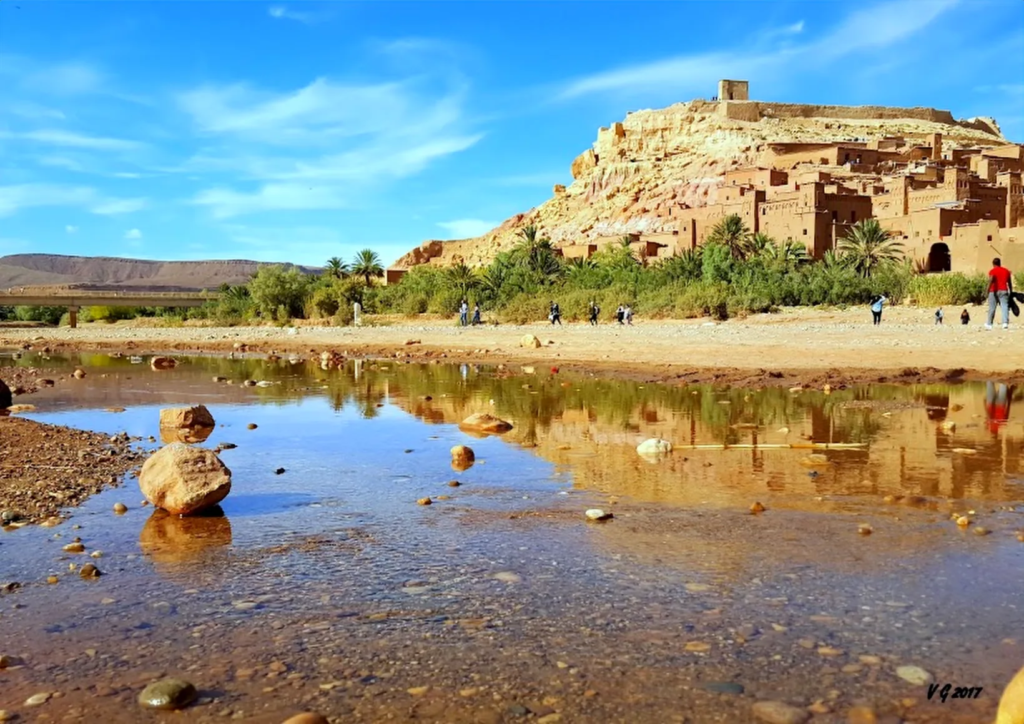
Around midday you reach Aït Benhaddou, the fortified mud-brick ksar that has appeared in more films than most actors. It is another UNESCO-listed site, and the walk up to the granary at the top takes 20–30 minutes. A few families still live inside; entry to their houses usually costs a small tip of 10–20 MAD.
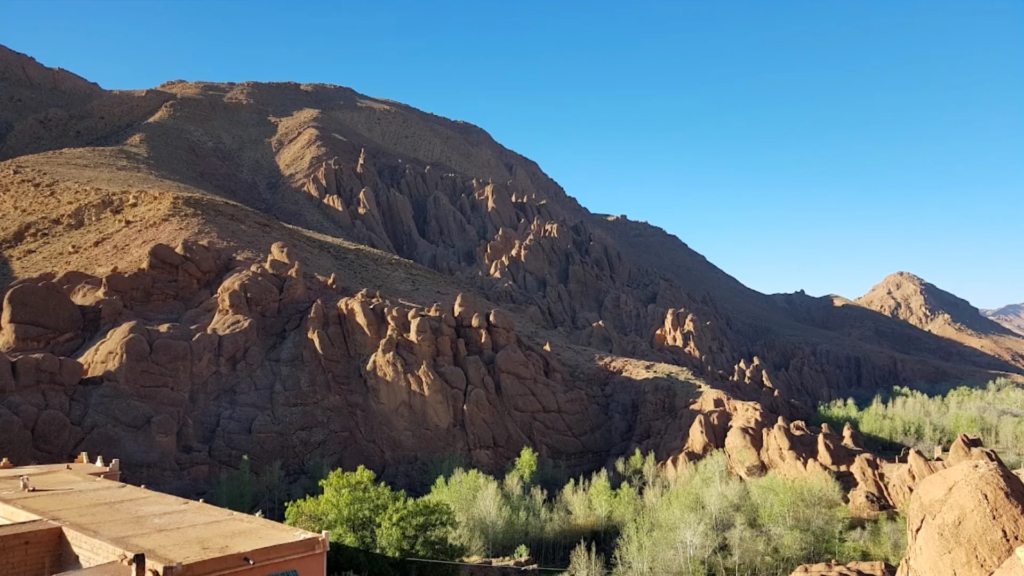
After lunch you pass Ouarzazate and follow the Valley of Roses towards the Dades Gorge, where you sleep. Guesthouses here sit right above the river, and dinner is almost always a tagine with a view of the red rock walls. Roughly 8 hours on the road with stops.
Day 4: Todra Gorge and a night in the dunes
The morning drive leads to the Todra Gorge, where the canyon walls narrow to a few metres apart and rise around 300 m above the stream. Walk the flat stretch at the bottom for half an hour before the coaches arrive. From there it is about three hours via Tinejdad and Erfoud to Merzouga, on the edge of the Erg Chebbi dunes.
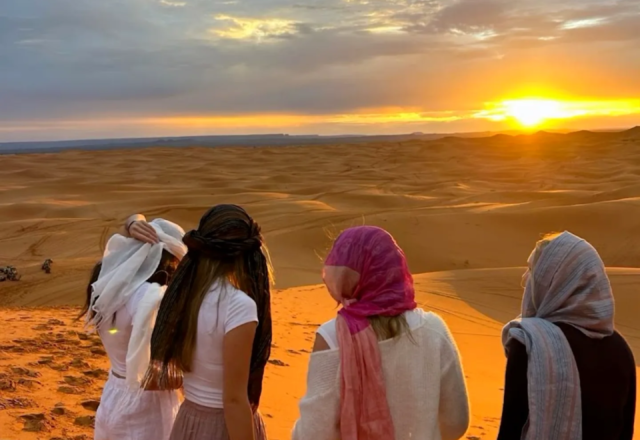
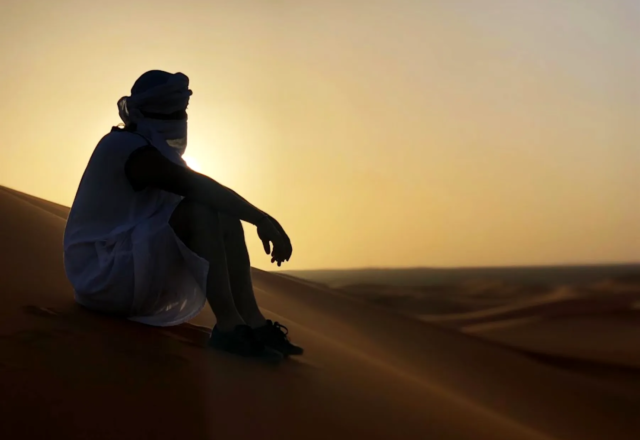
You meet your camels in the late afternoon. The ride to camp lasts about 1–1.5 hours, timed so that you crest a dune just as the sand turns copper. Camps range from simple Berber tents with shared toilets to luxury tents with en-suite showers and proper beds. After dinner come drumming around the fire and, on moonless nights, an extraordinary sky.
Desert tips from our drivers
- Pack a small overnight bag; your main luggage stays in the vehicle.
- Bring a headtorch, a warm layer and a scarf for wind-blown sand.
- Desert nights from December to February can drop close to 0°C.
- If you dislike camels, ask for a 4×4 transfer to camp instead.
Travellers short on time sometimes ask about Agafay instead; it is only 40 km from Marrakech, but it is a stony plateau rather than real dunes. We compare the two honestly in Merzouga vs Agafay desert.
Days 5–6: Fes
Day 5: Sunrise and the long drive north
Wake before dawn and climb the nearest dune to watch the sun come up over the Algerian horizon. After breakfast, ride back to Merzouga for a shower, then set off for Fes, about 470 km and 7–8 hours away.
It is a long day, but not a dull one. The road follows the palm groves of the Ziz Valley, climbs past Midelt with the snowy Jbel Ayachi on your left, and crosses the cedar forests near Azrou, where Barbary macaques wait by the roadside for snacks. Ifrane, with its pitched roofs, looks oddly Alpine. You will reach Fes in the early evening.
Day 6: Inside Fes el-Bali
Fes el-Bali is the largest car-free urban area in the world and has been a working medina for over a thousand years; UNESCO lists the Medina of Fez for good reason. It is also far more confusing than Marrakech. This is the one place where we insist on a licensed guide for at least half a day. Expect to pay approx. 400–600 MAD for a half or full day.
- Enter through the blue-tiled Bab Boujloud and walk down Talaa Kebira.
- Visit the Bou Inania and Al-Attarine madrasas, both masterpieces of Marinid carving.
- Peer through the doors of the Al-Qarawiyyin mosque and university (non-Muslims cannot enter).
- See the Chouara tannery from a leather shop terrace. You will be handed a sprig of mint for the smell, and a small tip or purchase is expected.
- Finish at the Merenid Tombs for a sunset view over the whole medina.
For dinner, try pastilla, the sweet-savoury pigeon or chicken pie that Fassis consider their own. Our Fes tours include guided medina walks and a Meknes and Volubilis day trip, which is worth it only if you add a night.
Day 7: Train to Casablanca and departure
Most international flights leave from Casablanca’s Mohammed V airport, which has far more connections than Fes. The ONCF train from Fes to Casa Voyageurs takes around 4 hours, with departures roughly every one to two hours from early morning. A second-class ticket costs approx. 130–200 MAD and first class a little more; buy on the ONCF website or at the station. From Casa Voyageurs, the airport shuttle train takes around 40 minutes.
If your flight is in the evening, take an early train and visit the Hassan II Mosque, one of the few mosques in Morocco open to non-Muslims on guided tours (tickets approx. 130–150 MAD; tour times change on Fridays and during Ramadan). Then eat grilled fish at the old port before heading to the airport. If your flight is before midday, skip Casablanca and fly out of Fes-Saïss airport instead.
Alternative extensions: Chefchaouen vs Essaouira
With an eighth or ninth day, you can add one more stop. These are the two we get asked about most.
| Chefchaouen | Essaouira | |
|---|---|---|
| Best added | After Fes (about 4 h by road) | Before the desert, from Marrakech (about 3 h) |
| Atmosphere | Quiet blue-washed mountain town in the Rif | Breezy Atlantic port with ramparts and fishing boats |
| Highlights | Photogenic lanes, the Spanish Mosque viewpoint, Akchour waterfalls | Fresh fish at the port, the Skala ramparts, kite and windsurfing |
| Downsides | Crowded midday; few sights beyond the medina itself | Wind can be relentless, especially in summer |
| Ideal for | Photographers, hikers, slow travellers | Couples, families, anyone needing a rest after the road |
Our view: if you are flying home from Casablanca or Tangier, Chefchaouen fits naturally after Fes, and the Fes to Chefchaouen day trip is an option if you cannot spare a night. We still recommend sleeping there, because the town is at its best before 9 am. If your flight leaves from Marrakech, Essaouira is the easier add-on.
Budget summary: what 7 days in Morocco costs
These are approximate daily costs per person, based on two people sharing a room, and include accommodation, food, local transport and entry fees. They exclude international flights. We use 10.7 MAD to €1 and 9.8 MAD to US$1, rounded.
| Travel style | Per day (MAD) | Per day (€) | Per day (US$) | What you get |
|---|---|---|---|---|
| Backpacker | 400–600 | €37–56 | $40–60 | Hostel dorm or simple riad room, street food, CTM buses, shared desert tour |
| Mid-Range | 1,200–2,000 | €110–190 | $120–205 | Characterful riad, restaurant meals, private driver for the desert stretch, first-class train |
| Luxury | 4,000+ | €375+ | $410+ | Boutique riads or palace hotels, luxury desert camp, private guides throughout |
The desert section is where costs jump. A shared three-day trip from Marrakech to Fes can cost a third of a private one, but you will travel in a minibus with 15 others and stop where the group stops. For a full breakdown of prices, see how expensive is Morocco.
When to go
March to May and late September to November are ideal for this route: warm city days, comfortable desert nights, and green Atlas valleys in spring. July and August bring 40°C-plus heat in Marrakech and Merzouga, while December and January mean cold desert nights and possible snow on the Tichka pass. Our guide to the best time to visit Morocco goes month by month.
Frequently asked questions
Is 7 days enough for Morocco?
It is enough for a first taste of Marrakech, the Sahara and Fes, provided you accept two long driving days. You will not see the coast or the north properly; those need a second week or a return trip.
Should I start in Marrakech or Casablanca?
Start wherever your flight is cheapest. Marrakech makes a gentler introduction, while Casablanca usually has more international connections. The route works in both directions.
Can I do this itinerary by public transport?
Partly. Trains and CTM or Supratours buses link the cities well, but reaching Merzouga and continuing to Fes by bus takes much longer. Most independent travellers book a desert tour or hire a car with driver for Days 3–5.
Is it safe to drive myself?
Roads are generally good, but mountain bends, livestock and night driving make it tiring. Many visitors prefer a driver so they can enjoy the views.
Do I need a visa for Morocco?
Citizens of the UK, EU, US, Canada and Australia can usually visit visa-free for up to 90 days. Your passport should be valid for your whole stay; check your government’s travel advice before booking.
Ready to turn this plan into your own week in Morocco? Tell us your dates, travel style and budget, and our Marrakech team will adjust the route for you. Get in touch with us and we will reply with a tailor-made proposal.