
Morocco food tours are the quickest way we know into this country, because almost everything that matters here happens around a shared plate. Food is how people here welcome you, argue, celebrate and say goodbye.
Our team in Marrakech has spent more than a decade taking travellers into the medinas, kitchens and farms behind the dishes. This page explains the food experiences we organise: evening street-food walks, cooking classes in riads and on farms, spice market visits, olive oil and argan cooperatives, and how any of them can be slotted into a tour you are already planning. If you want to know what a rfissa or a tangia actually is before you arrive, our guide to Moroccan dishes covers the recipes; here we focus on where and how to taste them.
Souk street-food walks in Marrakech and Fes
The two great medinas eat very differently, which is why we treat them as separate experiences rather than one generic tasting.
Marrakech after dark
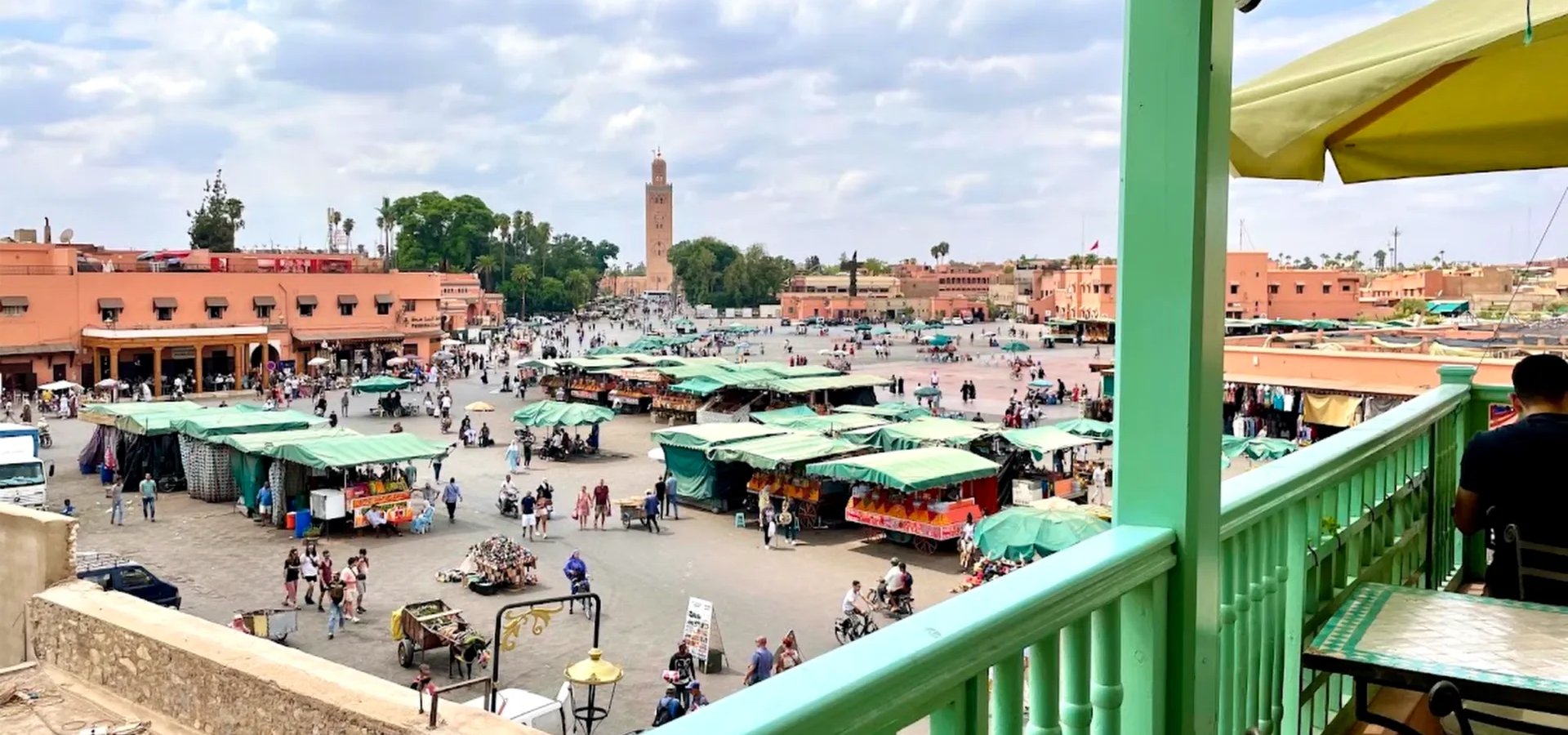
Jemaa el-Fna fills with grill stalls from late afternoon, and a good guide will steer you past the touts towards the benches locals actually use. A typical evening walk lasts around three hours and starts at about 6 pm. Expect harira soup with dates, msemen flatbread folded around honey or spiced onion, bowls of snails in a peppery anise broth, and a glass of ginger and cinnamon tea to settle it. Then we head into the lanes north of the square for slow-roasted lamb, pulled straight from an underground oven and sold by weight with cumin and salt, and for tangia, the clay urn of beef cooked for hours in the embers of a hammam furnace. The whole medina, listed by UNESCO, feels different when you navigate it by appetite.
Fes in the morning
Fes is a breakfast and lunch city. We meet early at Bab Boujloud and work down Talaa Kebira, stopping for bissara (a thick fava bean soup with olive oil and cumin), sfenj doughnuts fried to order, fresh goat cheese wrapped in palm leaves, and khlii, the dried spiced meat preserved in its own fat. Most walks finish with a simple lunch in a family-run restaurant. You will find practical medina advice on our Fes activities page.
Cooking classes: riad kitchens and farm tables
A cooking class is the one food experience we recommend to almost everyone, including people who rarely cook at home. You leave knowing how to balance a spice blend.
- Riad-based classes take place in a traditional house inside the medina. They usually begin with a short market walk to buy vegetables, herbs and spices, then three or four hours at the stove learning a salad selection, a tagine and a pastry or bread. You eat what you cooked on the roof terrace.
- Farm-based classes run in the countryside outside Marrakech, in the Ourika valley or on the Atlas foothills. You pick vegetables, bake bread in a clay oven and cook over charcoal braziers, often with a family who still farms the land.
We are a tour agency, not a cooking school, so we book these classes with trusted local partners we have worked with for years. Tell us your dates and interests and we will suggest the one that fits best.
Tagine tastings, spice markets and cooperatives
Tagine tastings on the road
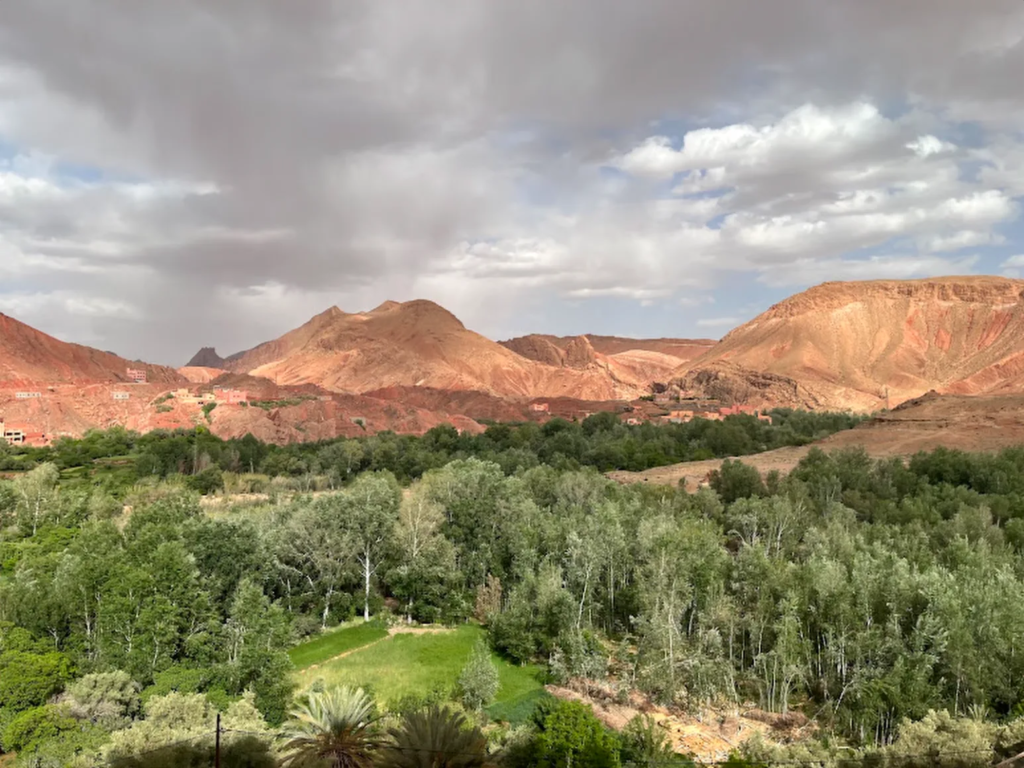
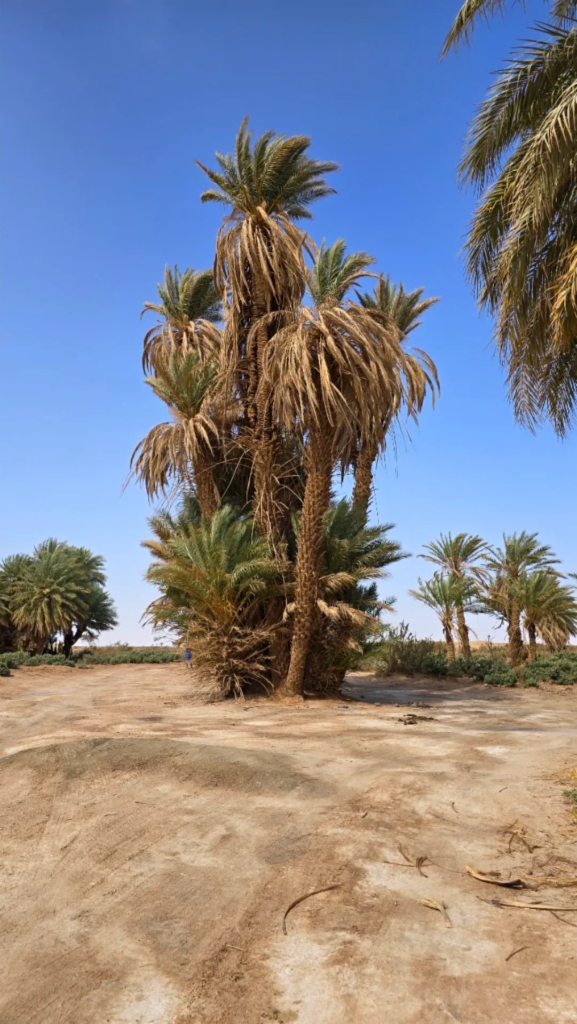
Every region cooks its tagine a little differently. In the Middle Atlas you may get lamb with prunes and almonds; around Ouarzazate, kefta and egg; in the Draa Valley, a vegetable tagine sweet with local dates. Our drivers know the roadside places that cook to order.
Spice markets
In Marrakech the Rahba Kedima square sells spices, dried roses, henna and argan products; in Fes the stalls cluster around the Attarine and Henna souks. A guide helps you buy ras el hanout by the gram and spot fake saffron.
Olive oil and argan cooperatives
Women’s argan cooperatives line the road from Marrakech to Essaouira, where you can watch kernels cracked by hand and taste amlou, the paste of argan oil, almonds and honey. Olive presses near Meknes and in the Ourika valley are busiest during the November to January harvest, when fresh oil is poured straight onto warm bread.
Which food experience suits you?
- First visit, short on time: an evening street-food walk in Marrakech.
- Keen cooks: a riad class with a market visit in the morning.
- Families with children: a farm-based class with bread baking.
- Travelling between Marrakech and the coast: an argan cooperative stop.
- Autumn or winter trips: an olive harvest visit near Meknes.
Tours that pair well with food experiences
These tours start in Marrakech or Fes, so a street-food walk or cooking class fits naturally before or after the main itinerary. All can run as a private tour with your own driver.
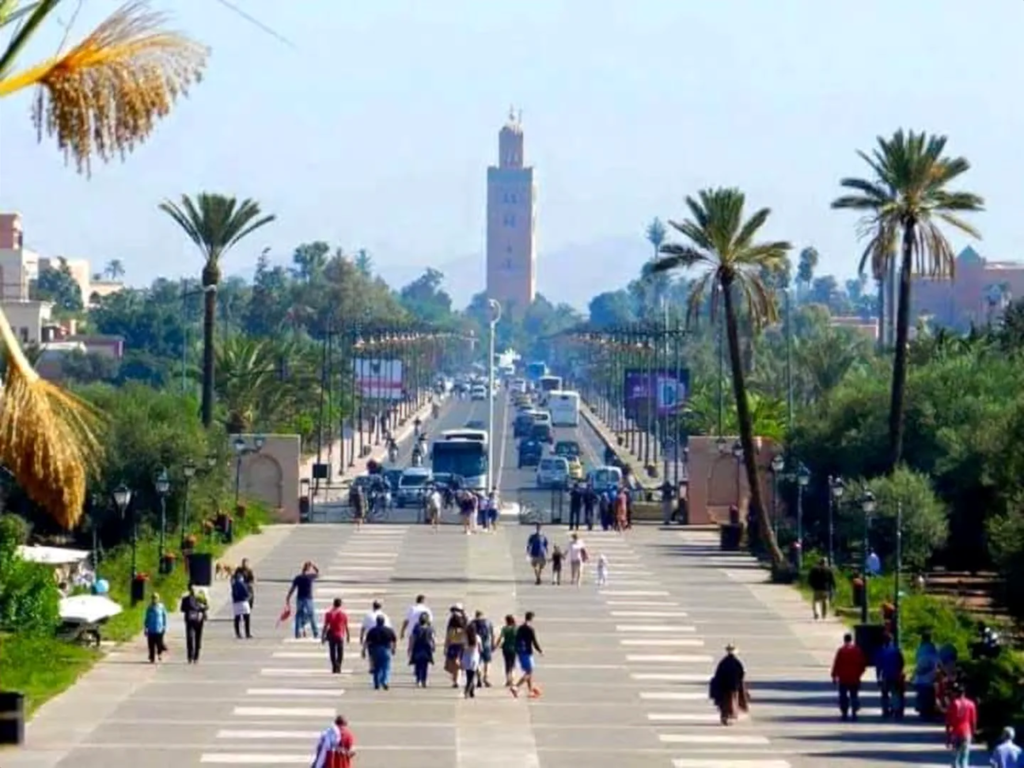
 Private tour · 3 days · from Marrakech
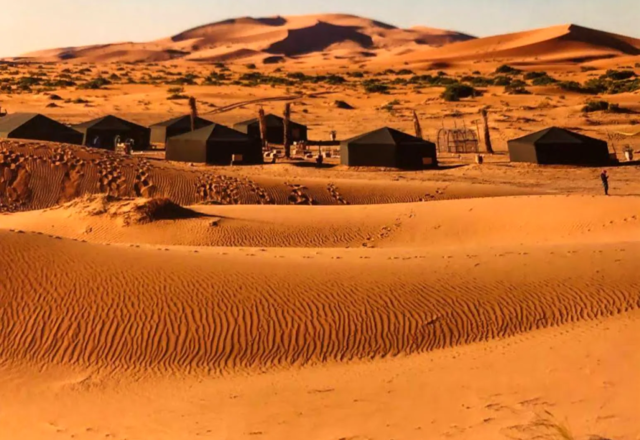
3-Day Desert Tour from Marrakech to Merzouga
- Private tour · 8 days
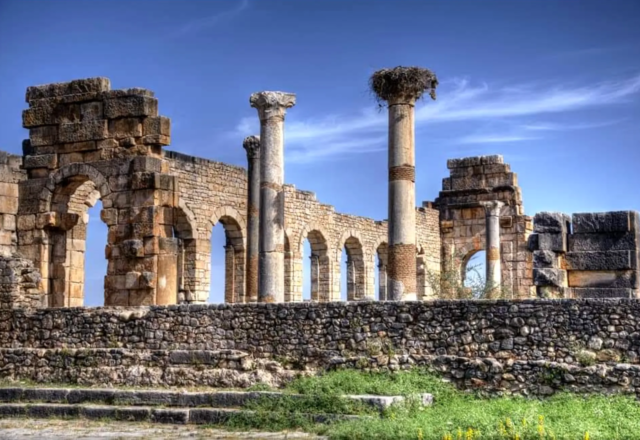
8-Day Morocco Tour from Fes
- Private tour · Day trip
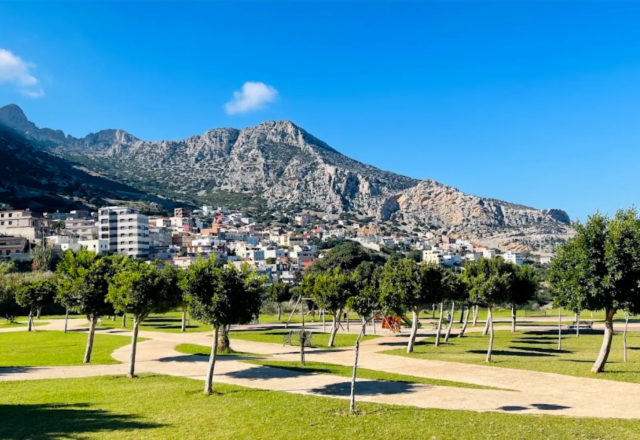
Day Trip from Fes to Chefchaouen, the Blue City
How we add food experiences to any tour
Most of our guests add one or two food experiences to a desert trip or city break rather than booking a dedicated food holiday.
- Choose a tour or ask for a tailor-made itinerary.
- Tell us which food experiences appeal and roughly when you arrive.
- We check availability with our partners and send a free quote with the experiences built into the schedule.
- Book online with a 10% deposit by PayPal or card; the balance is paid on the day.
Timing matters more than people expect. Evening walks work best on the night you arrive, before you are tired of the medina; cooking classes are ideal on a rest day after the desert. Where you sleep also changes things: a riad in the old town makes the food walk a stroll home, as we explain in our riad or hotel comparison.
| Experience | Where | Duration | Best time of day |
|---|---|---|---|
| Street-food walk | Marrakech medina | About 3 hours | Evening |
| Breakfast food walk | Fes medina | 3 to 4 hours | Morning |
| Riad cooking class | Marrakech or Fes | 4 to 5 hours | Morning into lunch |
| Farm cooking class | Outside Marrakech | Half day | Morning |
| Argan cooperative stop | Marrakech–Essaouira road | 45 minutes | En route |
Dietary needs and food safety
- Vegetarian: easy almost everywhere. Vegetable tagines, lentils, zaalouk aubergine salad and bissara are staples. Ask whether couscous was cooked over meat stock.
- Vegan: manageable with notice; butter and smen (aged butter) appear in some pastries and couscous.
- Gluten-free: harder, as bread comes with every meal and couscous is wheat. Grilled meats, salads and tagines without bread are safe choices.
- Allergies: nuts, especially almonds, appear in many sweet dishes. We brief guides and cooks in Arabic or French.
- Halal and alcohol: meat is halal as standard; alcohol is limited to licensed hotels and restaurants.
On stomach health, our guides choose busy stalls with fast turnover, and we suggest bottled water and peeled fruit for the first few days.
Frequently asked questions
Can I join a food walk without booking a full tour?
Yes. If you are already in Marrakech or Fes, contact us with your date and we will check partner availability for a stand-alone walk or class.
Are cooking classes suitable for children?
Farm-based classes are the better choice for younger children, with more space and hands-on tasks like kneading bread. Riad classes suit teenagers and adults.
How much food is served on a street-food walk?
Enough to replace dinner. Most guests stop eating after eight to ten tastings, so arrive hungry and skip a late lunch.
Which month is best for food experiences?
Spring and autumn are the most comfortable for walking the souks. November to January adds the olive harvest, and summer evenings in Marrakech are warm but lively.
Do you offer food tours in the desert?
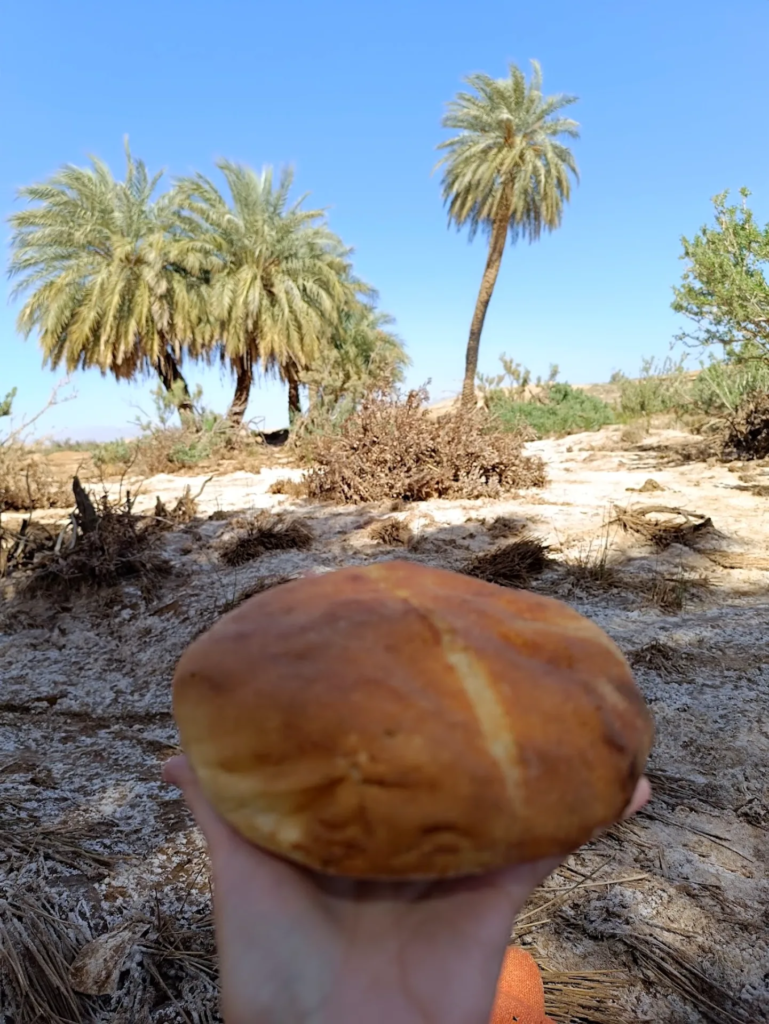
Desert camps cook tagines and bake bread in the sand, and in Merzouga you can try madfouna, the stuffed Berber flatbread sometimes called Berber pizza. We can include it on any Sahara trip.
If you would like a street-food evening, a cooking class or an olive harvest visit added to your trip, get in touch with our Marrakech team by email at nomalortravel@gmail.com or on WhatsApp at +212 673 55 54 08. Share your dates, group size and dietary needs for a free quote.